
TRIFECTA Performance
-
Posts
1,817 -
Joined
Content Type
Profiles
News
Store
Downloads
Everything posted by TRIFECTA Performance
-
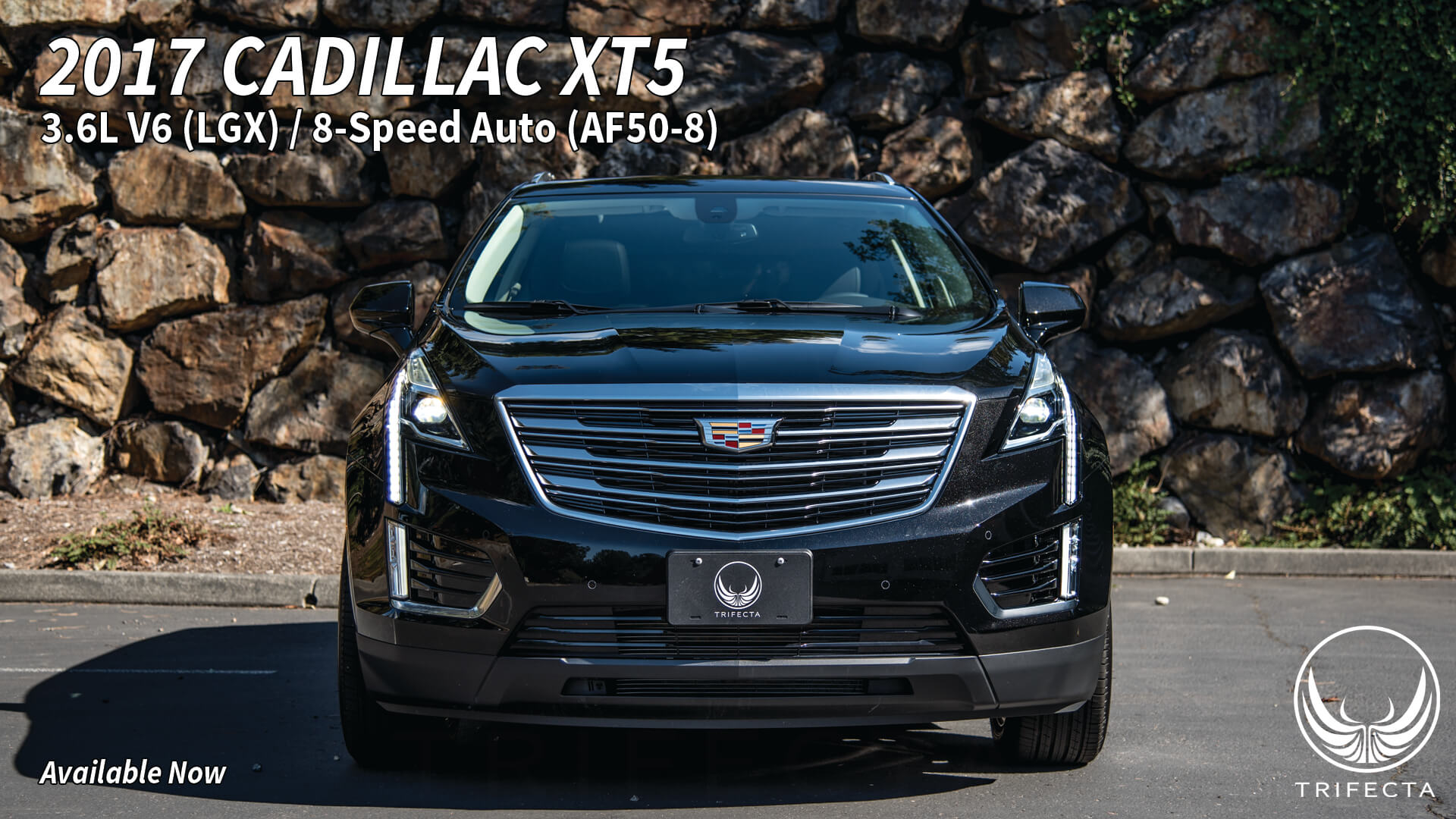 2017 Cadillac XT5 3.6L (LGX) 2017 Cadillac XT5 2.0L Turbo (LTG)
 -
-
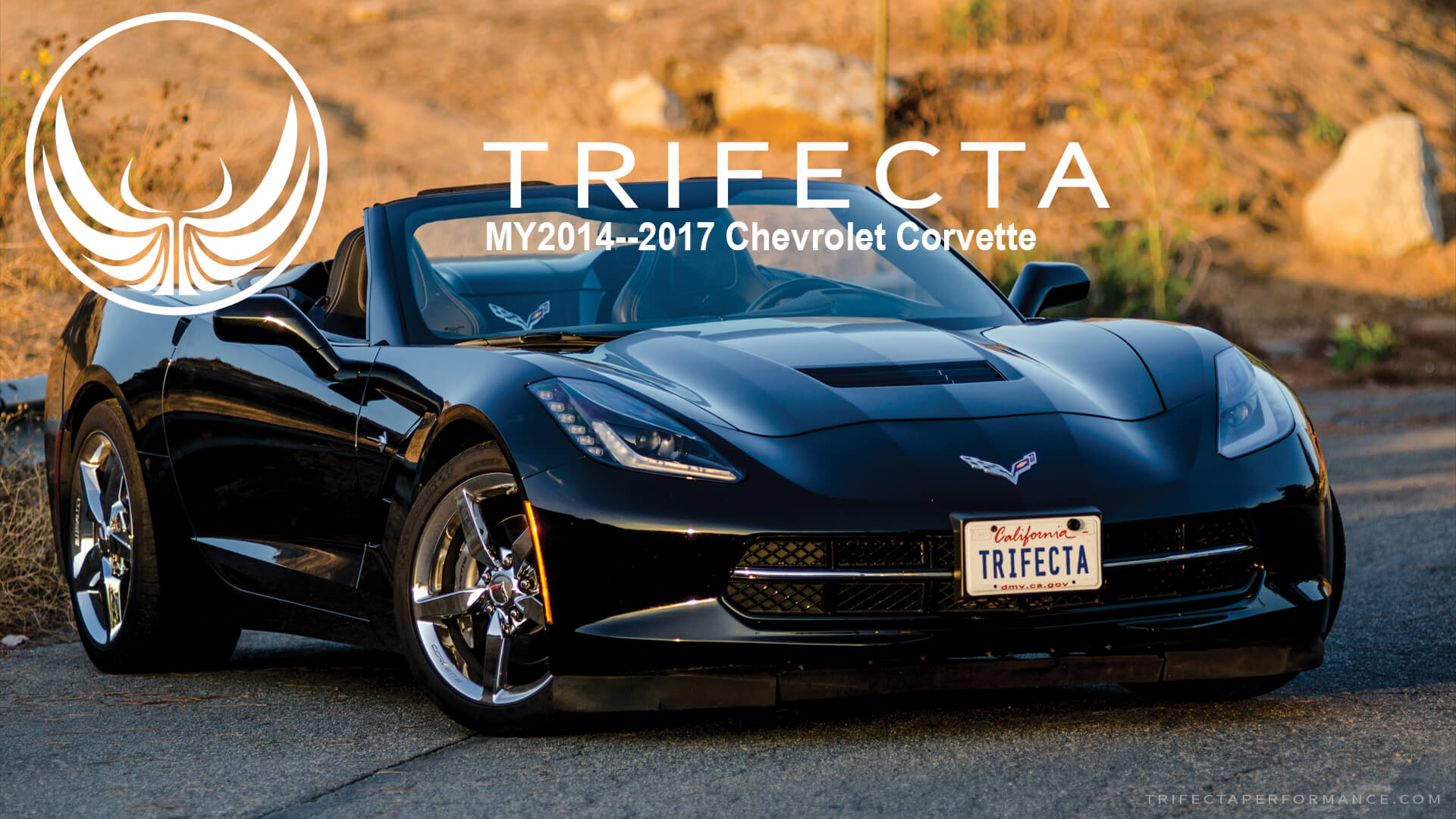
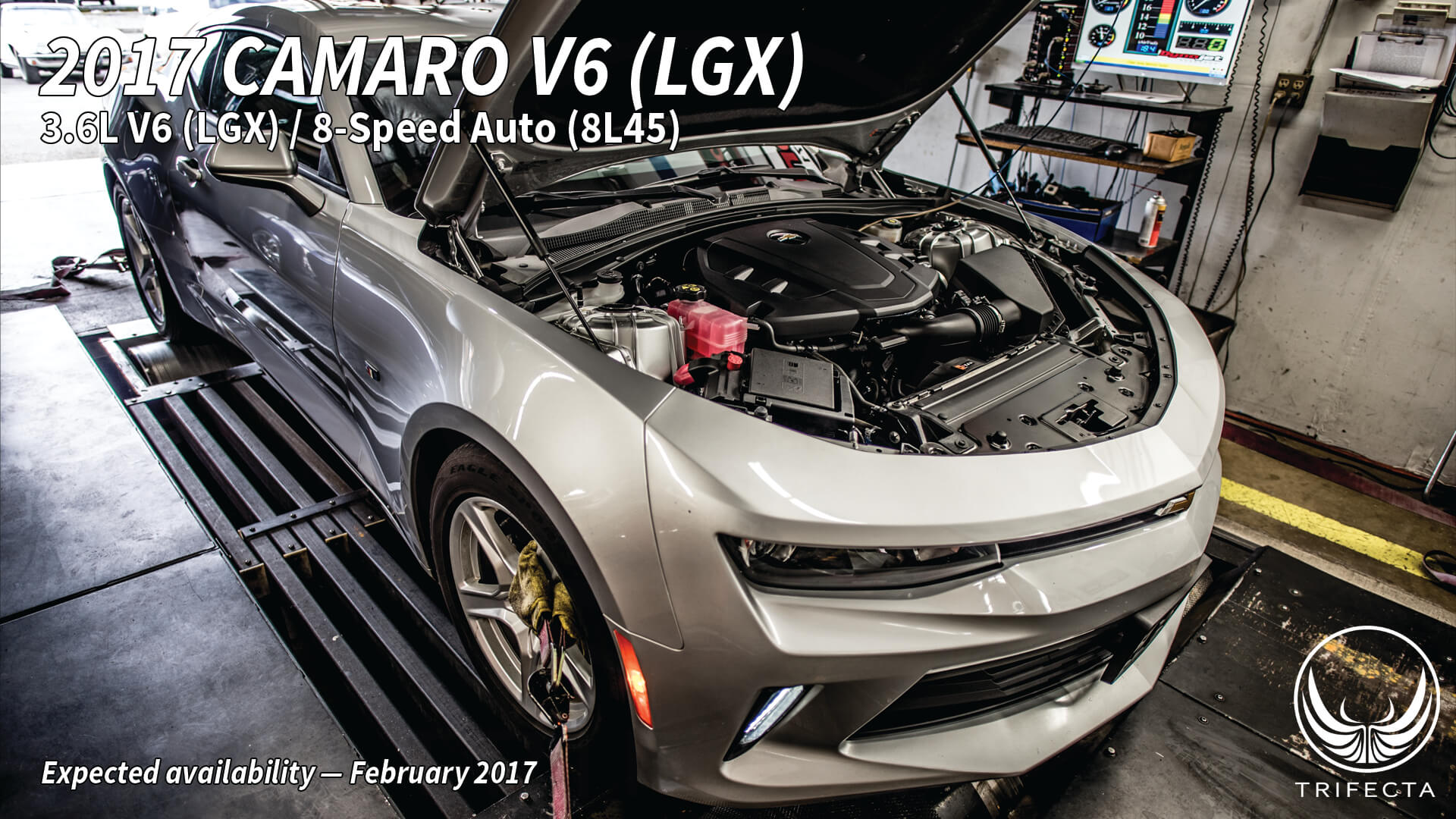 The 2017 Chevrolet Camaro V6 (LGX) product offers the same performance and features the 2016 model year product offers, including: * Up to 17 lb-ft of torque gain, and up to 23 horsepower gain * Performance AFM mode (formerly known as “select-a-AFM”) - disables AFM (V4 mode, if applicable) entirely while vehicle is in SPORT mode for improved exhaust note and responsiveness * Retains use of all drive modes, winter / snow / ice mode retains factory characteristics * Linear and attentive power delivery and throttle response * Progressive and purposeful downshifting for top performance under any driving condition * Support for aftermarket modifications available Estimated availability: Early February 2017 (manual transmission support available now) Read our original Camaro V6 (LGX) product release: TRIFECTA presents: 6th Gen Chevrolet Camaro MY2016+ 3.6L (LGX) Powertrain Calibration Read more about the NEW LGX V6 engine in the Camaro: TRIFECTA: The next generation of V6s from GM (RPO: LGW, LGX, and LGZ)
 -

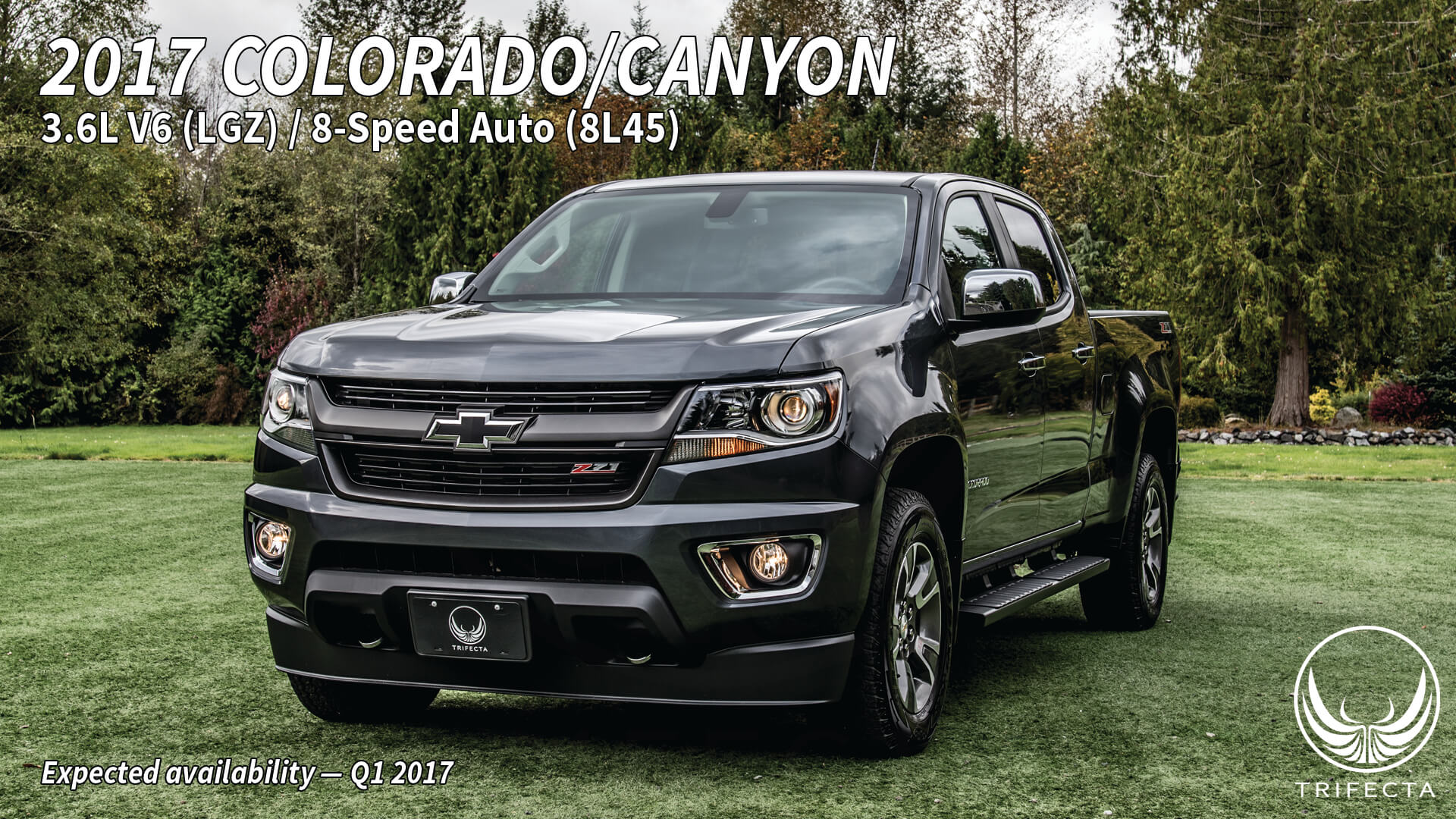 The 2017 model is a game changer, though. The 2017 V6-equipped Chevrolet Colorado / GMC Canyon, while externally, is identical to the earlier models (save for a new V6 badge on the tailgate), in fact received two major powertrain updates: the new 3.6L LGZ engine, and the 8L45 8 speed automatic transmission. For our write-up on the comparison between the older V6 and the new one, see our article here: TRIFECTA: The next generation of V6s from GM (RPO: LGW, LGX, and LGZ) Right off the bat, we noticed that the transmission shift strategy is improved. With the addition of two gears and a wider gear ratio-spread, the new 8 speed transmission is much more capable at finding the ideal gear to be in, depending on what the driver wants to do. Downshifts are more progressive (though we patently dislike the detent in the accelerator pedal at the end of its travel, the threshold of which must be passed to get the transmission to downshift to the lowest possible gear), and gear changes are smooth and efficient. Furthermore, all of this and the transmission allows the vehicle to run at a lower RPM, improving fuel economy. Out of the box, the new LGZ engine (which is a variant of the 3.6L LGX engine offered in the 2016+ Chevrolet Camaro and most 2016+ Cadillac vehicles) offers 3HP gain over the outgoing LFX engine, and torque is improved by 6 lb-ft. This might not sound like much, but when combined with the more favorable gear ratios the rest of the powertrain offers, the truck accelerates impressively while being able to tow up to 7000 pounds. The LGZ engine also introduces active fuel management (AFM) to the Chevrolet Colorado / GMC Canyon. AFM allows the vehicle to disable two of the cylinders under light load to further improve fuel economy. We found the AFM transitions to be smooth and, frankly almost unnoticeable. We are in the midst of our development cycle for the 2017 Chevrolet Colorado / GMC Canyon and are working tirelessly to analyze the factory drivability experience to look for ways to make a great truck even greater! Expect to see updates from TRIFECTA as we work through our performance tuning product for the 2017 Chevrolet Colorado / GMC Canyon, and search for every bit of extra power we can wring out of it! View our product for the 2015--2016 Colorado/Canyon here: Chevrolet Colorado GMC Canyon
 -
-
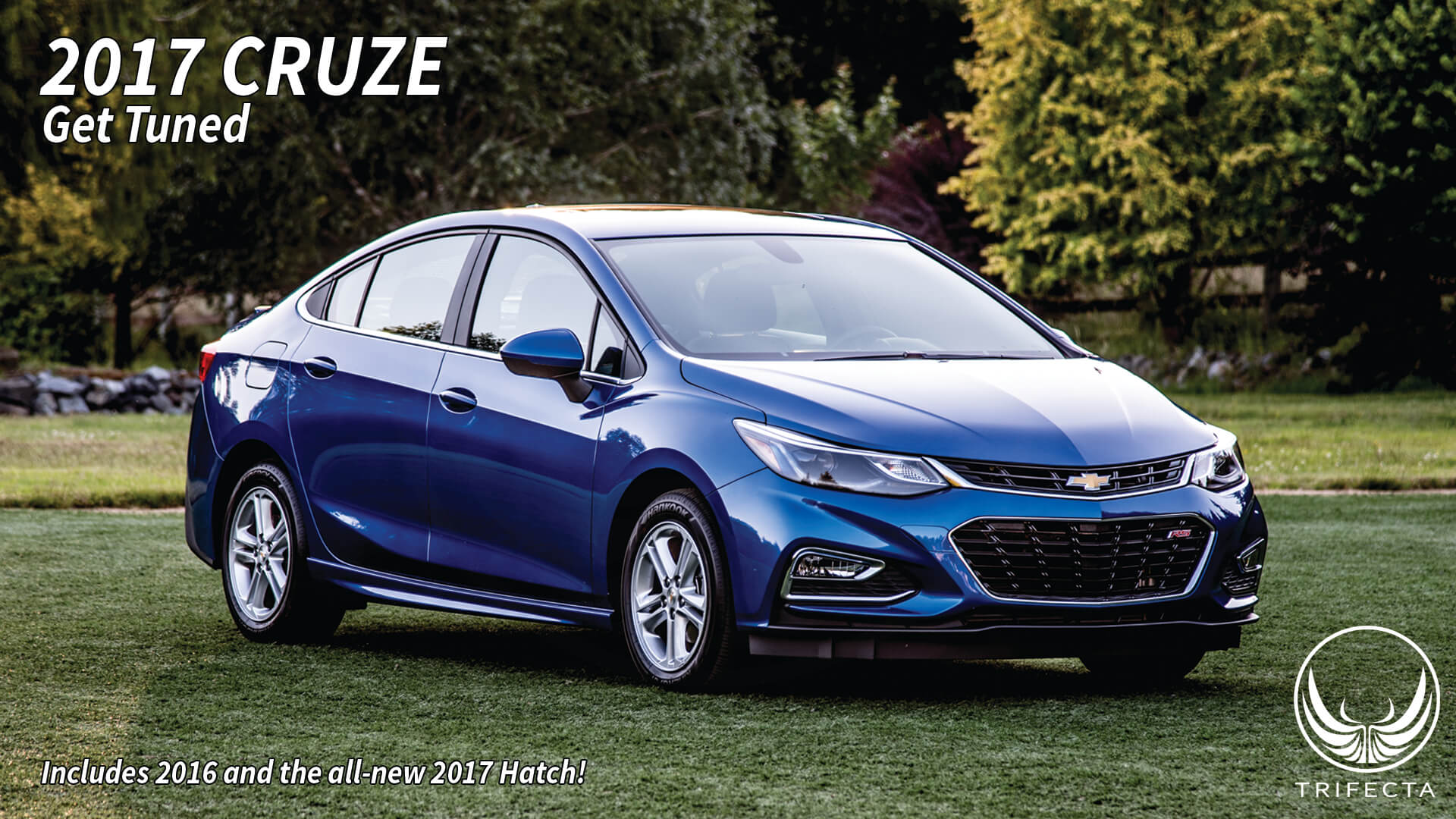 Easily add up to 97 lb-ft of torque and 59 horserpower, measured at the wheels, for your 2016 and 2017 Cruze, including the all-new performance-inspiring 2017 Cruze Hatchback Fuel economy gains showed versus factory tuning, depending on driving style. TRIFECTA driver selectable vehicle modes (DSVM) allow "on the fly" switching between the stock drive character, and TRIFECTA's performance calibration. TRIFECTA performance auto-stop mode (PASM) allows the essential disabling of auto-stop, on the fly, for a more responsive and sporty experience. Easily reversible to stock programming for service visits Chevrolet Cruze - 1.4L Turbo Read more about TRIFECTA's 1.4T LE2 Support: TRIFECTA: More power, more fun for your 2016+ Chevrolet Cruze 1.4L Turbo (LE2) TRIFECTA: Making Auto Stop more performance oriented. Meet Performance Auto Stop Mode. TRIFECTA: Baseline dyno testing of the 2016 Chevrolet Cruze RS 1.4 Turbo (RPO LE2) TRIFECTA: 1.4L Turbo Throttle Body Comparison LE2 to LUJ/LUV TRIFECTA: Meet the GM LE2 Engine
 -
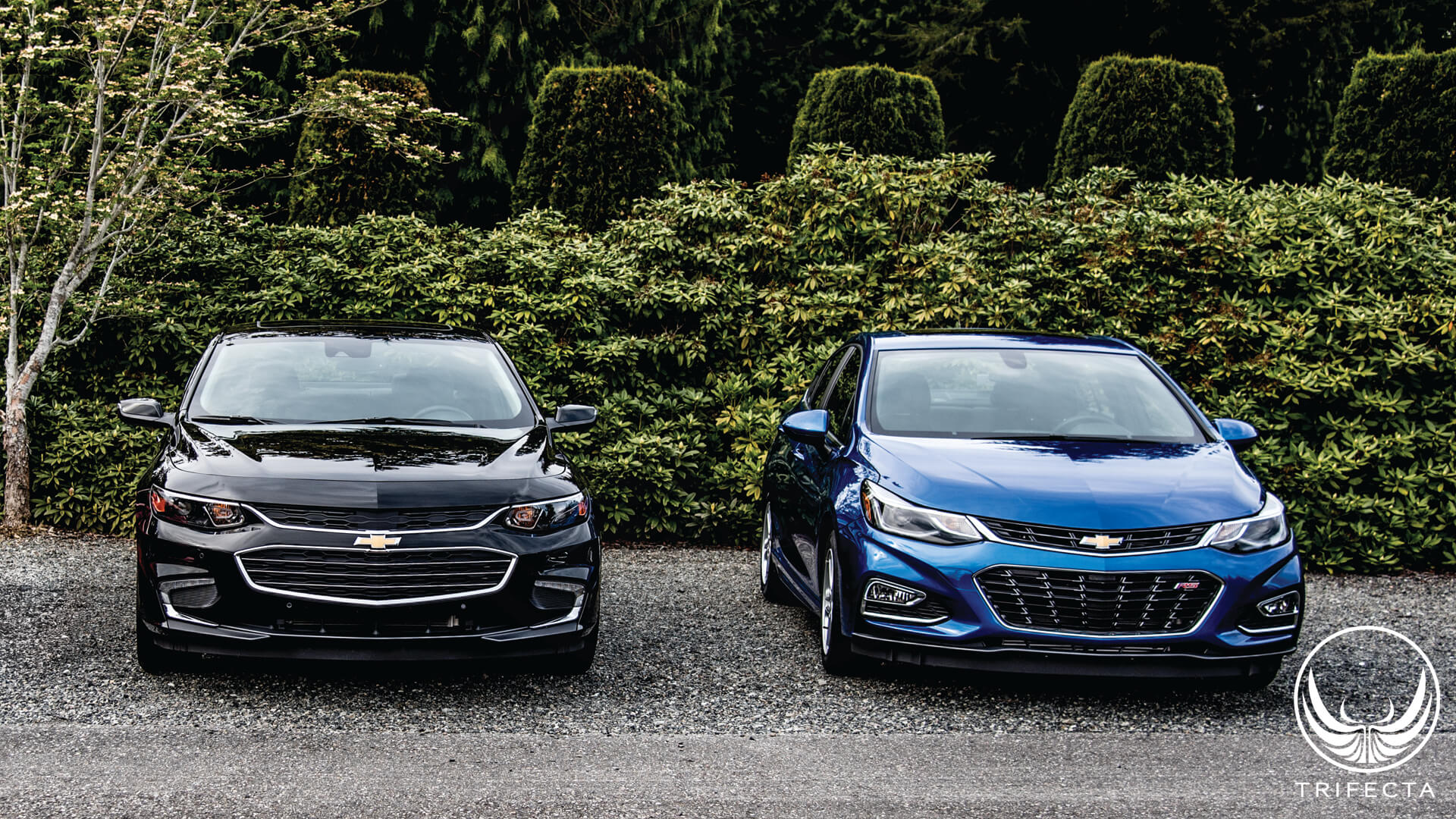 1.4L vs 2.0L turbocharged engines Looking at the numbers from the 1.4T engine vs the 2.0T engine, you can see why people that want to go really fast with a Cruze might want to do this. The 1.4T engine, from the factory produces 139HP (the new 1.4T “LE2” engine produces 154HP), and the 2.0T engine produces anywhere from 220HP to 272HP depending on which engine and variant is used. Put an aftermarket calibration on these engines and they approach 200-220HP, and 300-330HP, respectively. (Source: media.gm.com) So, let's swap the engine already! Great! So we know we want a 2.0L turbo engine in our Cruze, let's just swap one in! Unfortunately, it's not even close to being that simple. The 1.4T and the 2.0T are of different physical sizes, and are of varying architecture, specifically being that the earlier 2.0T (the LNF/LHU engine) has the turbocharger on the opposite side of the engine as the 1.4T does. The newer 2.0T (LTG engine) has the turbocharger on the correct side, but still has the challenge of being physically larger than the 1.4T. Right off the bat, custom engine mounts would have to be developed, coolant and oil hoses would need to be customized, new exhaust would have to be fabricated, front to back, wiring harness would have to be customized. Now, we would surmise that swapping in a 2.0T (LHU engine) from a Buick Verano, being that the Verano is of the same chassis as the Cruze, might allow the use of factory harnesses and parts that would make the swap much easier, but every element listed above should still be of concern. But that's just the engine. Then there's the transmission. Particularly in front wheel drive applications like the Cruze, GM has no less than eight different transmissions supporting varying levels of torque. The Cruze with the 1.4T is equipped with the 6T40 transmission, and the Verano, for instance, is equipped with the 6T50 transmission. One might get away without swapping the transmission, but for completeness's sake, we're going to assume this needs to be swapped as well. Then there's ECU swap, the potential for needed customized drive axles, upgraded radiator size, etc. Cost of engine swap In any event, let's just assume, for simplicity's sake that the entire engine, transmission, harness, and ECU can just be swapped from the Verano. We couldn't find any specific salvage pricing on this, but we'd expect it to be in the $2000-$4000 range for all of the components required. Then there's the labor of doing the swap. Maybe an enthusiast would undertake this on their own, in which case tangible labor cost would be zero. Miscellaneous parts, exhaust fabrication, etc., we estimate would add another $2000 or so to the project cost. But then there's the resale value of the vehicle itself. If someone were to perform a swap like this on a Cruze, its value would plummet. This vehicle, even assuming it ran perfectly, would require a special buyer when the time came to sell it. The oldest Cruzes available in the United States sell for between $8500 and $15000. We'd expect a swap like this to cause a 30% loss in value, so, let's say $2500 just to pick a round number. Total cost of engine swap: about $7500 or more Yes, we said it: buy a Malibu instead of a Cruze As mentioned above, this is a bold idea. Most current or potential Cruze owners, right off the bat would scoff at this idea. Buying a “family hauler” instead of the more-sporty Cruze?? After all, Malibus are built for the rental car agencies, right? A Malibu lacks style at all. It's big. It's heavy. It's slow. There's no aftermarket for it. And it's more expensive. However, starting with the 2016 model year, Chevrolet introduced both an all-new Cruze and all-new Malibu. The aesthetic differences between the two are much fewer than with the previous generation. Malibu vs Cruze Indeed, Chevrolet is now using fairly common design language between the Cruze, Malibu, and the larger-yet Impala. If we are to assume that the looks of the all-new Malibu are acceptable to a potential Cruze owner, let's move on to a more detailed analysis of the likenesses and differences between the two models. Performance: You can get a 2.0T with a Malibu. And also an 8 speed automatic. The new Cruze, for 2016, only offers one engine: the 1.4L Turbo LE2 engine, which produces 154HP and 177 lb-ft of torque. The new Malibu offers two engines (exc. the Hybrid model), a 1.5L Turbo LFV engine (163HP / 184lb-ft torque), and a 2.0L Turbo LTG engine (250HP / 260lb-ft torque). For the purposes of this writing, however, we are only going to look at the 2.0L Turbo engine. While the fact the Malibu doesn't offer a manual transmission (whereas the Cruze does) would be a deal-breaker for some people, the truth is most Cruzes are built and sold with an automatic transmission. A 6 speed automatic transmission. The Malibu, in contrast, with the 2.0L Turbo engine, is equipped with a smooth shifting 8 speed automatic transmission (also used in the Buick LaCrosse, and the Cadillac XT5). And for the 2017 model year, the Malibu 2.0L Turbo is stepping up to GM's all-new 9 speed automatic transmission. Not only does the Malibu 2.0T offer 96HP and 83lb-ft of torque more than the Cruze, with the 8 speed automatic transmission, there is a greater gear ratio spread which also contributes to both quicker acceleration compared to a 6 speed automatic, but also improved highway fuel economy vs a 6 speed automatic. How does the rest of the car match up? For sake of comparison, we will compare a 2016 Cruze LT Automatic/RS Package/Sun and Sound Package with a 2016 Malibu 2LT. For the Cruze, the LT Automatic/RS Package/Sun and Sound package is by far the most popular model at the dealerships, and the Malibu 2LT is the lowest trim level which is equipped with the 2.0T. Also, this gives us an apples-to-apples comparison. Don't get us wrong. The Malibu is a bigger car than the Cruze. It's more spacious in every way, but it also weighs more. But not THAT much more. The Cruze, in its lightest form weighs in at about 2600lbs. The Malibu weighs in at about 3100lbs. For those that love sunroofs, the Malibu's sunroof is quite superior. It's roughly double the size of the Cruze's sunroof (though only the front half of it opens). The Malibu comes with leather at this trim level, whereas the Cruze does not. The Malibu comes with 18” wheels, the Cruze with 16” wheels. Both have disc brakes on all corners. One area we feel the Cruze is superior, however, is in the handling-feel department. The Cruze has a stiffer ride, and experiences less “body roll” in the corners than its larger brethren, the Malibu. Economy-wise, the Cruze is rated up to 42MPG, and the Malibu up to about 35MPG with the 2.0T. Cost comparison At the end of the day, it comes down to cost. The Malibu is more expensive, for certain, but by significantly less than what it would cost to do an engine swap. According to Chevrolet.com, the 2016 Cruze LT Automatic, with the RS package, and the Sun and Sound package (which requires other packages such as the Convenience package) has an MSRP of $25335. The 2016 Malibu 2LT “base model”, which is similarly equipped to the Cruze LT Automatic, with the RS package, and the Sun and Sound package is $29495. This is a difference of only $4160. More car, a heck of lot more power, with similar styling. However, we found, at the time of purchase for both our Cruze 1.4T and our Malibu 2.0T, there were significantly better incentives available on the Malibu. At that time, one could lease a Malibu Premier, with every option under the sun, far beyond even the Malibu 2LT's option load-out, for about $275/mo and $3600 down payment, for 24 months. This works out to a total cost of $10,200 for two years. The Cruze, in contrast, was offered with the same lease terms for about $265/mo, and $2400 down payment. This works out to a total cost of $8760. This is only a difference of $1440 over the course of two years, and this is for a Malibu that is even more well-equipped than the Malibu 2LT we used for comparison. Were one to compare terms on the Malibu 2LT, it might actually be cheaper to acquire the Malibu than the Cruze! Conclusion We're making a very strong case for the Malibu vs the Cruze, here, for those that like the Cruze styling but want more power than the Cruze has to offer. Both the Cruze and the Malibu are especially exciting vehicles to drive with an aftermarket calibration, but, we have to be honest, the Malibu 2.0T with an aftermarket calibration blows the doors off a Cruze with an aftermarket calibration. Hence, we call the tuned Malibu 2.0T, “The 300HP Cruze”. Those considering a new Cruze, particularly those that want to go fast, should take a hard look at the Malibu. With the previous generation Malibu, we would have agreed with you: Are you kidding? But the new Malibu is a world's worth of improvement over the previous generation, and the differences between the Cruze and Malibu have been largely blurred. As is the pricing difference. TRIFECTA Calibration Engineering Team
 -
 2016 Chevrolet Camaro 3.6L (LGX) (source media.gm.com) Choose your displacement At the time of writing, there are three known Gen IV HFV6 engines being produced, in two different displacements: LGW: 3.0L (twin turbocharged) LGX: 3.6L LGZ: 3.6L (referred to as 'variant 2' by GM VIN cards) All engines share the same stroke, at 85.8mm. The LGW has a bore of 86mm (making it almost a “squared” displacement), and the LGX/LGZ has a bore of 95mm. The LGX and LGZ engines are basically identical, with the exception that the LGX was designed with car applications in mind and the LGZ is designed for the 2017+ mid size truck (Chevrolet Colorado and GMC Canyon). Horsepower and torque numbers quoted by GM's press releases seem to confirm this, with the LGZ bringing in slightly higher torque at 1000-1300 RPM lower than the LGX at a slightly cost of high RPM horsepower. Applications At the time of writing, the Gen IV HFV6 is either available currently, or will be in the future, in the following applications: 2017 Buick LaCrosse (LGX) 2016-2017 Cadillac ATS (LGX) 2016-2017 Cadillac CT6 (LGW, LGX) 2016-2017 Cadillac CTS (LGX) 2017 Cadillac XT5 (LGX) 2016-2017 Chevrolet Camaro (LGX) 2017 Chevrolet Colorado (LGZ) 2017 GMC Acadia (LGX) 2017 GMC Canyon (LGZ) What's changed since the Gen III HFV6? The question that most people want answered at this juncture is this: What has changed with these new engines (e.g. the LGX) versus the engines they are replacing (such as the LFX)? The answer? Virtually everything. While building on the success of the Gen III HFV6, and sharing many similar design patterns, GM claims the GenIV HFV6 is a “clean sheet redesign” of the HFV6 family emphasizing some of the following goals: Improved fuel economy (up to 9% vs the LFX when used with start/stop systems and 8 speed automatic transmissions) Improved power output (up to 335HP with the LGX vs 323HP with the LFX) Improved noise dampening Engine Architectural Similarities All High Feature V6 engines are 60 degree angled 6 cylinder engines arranged in a V formation. All HFV6 engines have 24 valves (2 intake valves, 2 exhaust valves) driven by double overhead camshafts (DOHC). The earliest HFV6 engines used MPFI (multi point fuel injection), but were all direct-injected (DI) by the time they reached the Gen III phase. They use a common firing order of 1-2-3-4-5-6. Engine Components Interestingly, the third generation of the HFV6 also came in both a 3.0L (LFW, LF1) and 3.6L (LFX) displacement, but the bore and stroke are all changed (especially in the case of the 3.0L): Engine Displacement Bore Stroke LF1, LFW (Gen III) 2994 cc (3.0L) 89mm 80.3mm LGW (Gen IV) 2989 cc (3.0L) 86mm 85.8mm LFX (Gen III) 3564 cc (3.6L) 94mm 85.6mm LGX, LGZ (Gen IV) 3647 cc (3.6L) 95mm 85.8mm GM says the engine block is all-new, utilizing an increased bore spacing (up from 103mm on Gen III, to 106mm on Gen IV). The block is stronger, and stiffer, “with increased structure in the bulkheads for superior rigidity” (source: GM media). On top, the cylinder head is redesigned for higher airflow and power levels, using intake and exhaust valves that are 6% larger each in the LGX than in the LFX. However, some of the most drastic changes in the Gen IV engine are part of the cylinder head (see Active Fuel Management section below). The Gen IV engines continue to use an integrated exhaust manifold design in that there is a single exhaust port on each cylinder head. Also, changes to the variable valve timing (VVT) system were implemented to allow for a wider range of control over valve timing. This is particularly the case on the intake camshaft, which, from the “parked position”, can be phased in either direction (as opposed to only one direction on the outgoing Gen III engines) The patented cooling system design was completely redesigned to allow for so-called “targeted cooling”. “This new, parallel-flow design maximizes heat extraction in the area of the upper deck, intake and exhaust valve bridges in the heads and integrated exhaust manifold with a minimal amount of coolant. The result is more even and consistent cooling, which enhances performance, and faster engine warmup, which improves cold-start efficiency and reduces emissions.” (Source: GM Media). Also, efficiency improvements in the cooling system allow GM to use a coolant pump that uses 50% less power to turn, leading to improved economy. Other changes include a dual-stage oil pump (similar to the Gen V V8 engines), redesigned oil pan for improved noise abatement, and simplified chain-based cam drive systems, to increase service life and also reduce noise. Active Fuel Management (AFM) One of the most astounding changes with the Gen IV HFV6 is the utilization of the same cylinder displacement technology that's used on the Gen V V8 engines and the newest 4.3L V6 used in the full size trucks (Chevrolet Silverado and GMC Sierra). GM calls this Active Fuel Management (AFM). On a basic level, AFM works by seamlessly disabling multiple cylinders, under light load conditions, on the fly, to reduce pumping losses. When a transition to AFM is occurring, the cylinders that are being disabled are allowed to complete a combustion event, but, beginning at the end of the power stroke, the intake and exhaust valves are disabled to keep the combusted charge in the cylinder, turning it, in effect, into a “gas spring”. When a transition from AFM is occurring, the exhaust valve is first allowed to open, to expel the previously trapped combustion charge, then the intake valve is enabled to begin normal operation on the next cycle. From a mechanical standpoint, AFM was much simpler to design on engines utilizing in-block camshafts (OHV V6 and V8s). We consider the deployment of AFM on a DOHC engine, like the Gen IV HFV6 to be an engineering feat. Furthermore, our engineers have found that AFM implementations on the Gen IV HFV6 are far more smooth and seamless than even on the current OHV engines. Turbocharging the HFV6 When the Gen III HFV6 was introduced in 2010 (with the LF1), it seemed twin-turbocharging was an eventuality based on some design decisions that were made (particularly the move to an integrated exhaust manifold in the cylinder head). This design allows a turbocharger to be directly bolted to the cylinder head, reducing the overall size footprint, reducing parts count and cost, and improving turbocharger response (reducing so-called “turbo lag”). 2016 Cadillac CT6 3.0L TT (LGW) (source: media.gm.com) At the time of writing, there were four twin-turbocharged variants of the HFV6 in use, three of them belong to the Gen III family, and one to the Gen IV family: Engine Displacement Application(s) Horsepower Torque Boost Level (observed) LF3 (Gen III) 3.6L 2014+ Cadillac CTS VSport 420HP 430TQ 12psi LF3 (Gen III) 3.6L 2014+ Cadillac XTS VSport 410HP 369TQ 12psi LF4 (Gen III) 3.6L 2016+ Cadillac ATS-V 464HP 445TQ 15psi LGW (Gen IV) 3.0L 2016+ Cadillac CT6 404HP 400TQ 15psi The turbocharged HFV6 engines have unique features that allow them to sustain the increased cylinder pressures and loads experienced by turbocharged engines including: Specialized engine blocks with specific oil and coolant passages to provide lubrication and cooling to the turbocharger assemblies Application-specific pistons to better withstand the loads of a turbocharged engine Increased valve sizes to allow for increased airflow Improved crankshaft and rod strength Spanning Generations of Engine Controllers An engine is only as capable as the electronic control unit (ECU) that controls it. Engine Controllers: E39, E92, E82 (source: TRIFECTA media) It was the arrival of the Gen III HFV6 in 2010 which ushered in a new era of both ECU software and hardware. The E39 (left) was the first Delphi-based controller to be capable of driving both DI engines and turbocharged engines. It was extensively deployed in 4 cylinder and V6 applications, and continues to be in use today (though its use is waning in favor of the newer E80, E81, and E82). The E92 (center) arrived in 2014 to drive the then-debuting Gen V V8s (LT1, L83, L86), new V6 (LV1, LV3), and a few of the HFV6 Gen III engines (LF3, LFX with 8sp auto). In 2015, the E92 was also used in the then-new Chevrolet Colorado and GMC Canyon with the LFX engine, and in 2016, the E92 was chosen to drive the new LF4 engine debuting in the 2016 Cadillac ATS-V. While the E92 is essentially an upgraded E39, sporting a larger EEPROM (flash) and a CPU with a higher clock speed, it is largely pin-compatible with the E39. The newest ECU family additions include the E81 (not shown) and E82 (right), which are now the standard ECUs driving the Gen IV HFV6 engines. While the ECU hardware has changed over the years (gradually increasing in EEPROM flash size, increasing CPU speed, and increasing the number of and types of inputs and outputs), it is interesting to note that the underlying software which controls the ECU itself has its roots all the way back to the original E39 introduced in 2010. Aside from needing to support ever-more complex engines, newer ECU technology was required to communicate with other vehicle ECUs which were increasing in both complexity and speed of communications (particularly with the adoption of 8 speed automatic transmissions). Conclusion The future of the HFV6 certainly looks bright and exciting! These V6 engines are producing more power than V8s 15 years ago were, at a fraction of the fuel consumption. The most exciting future prospect is “what is the Gen IV 3.6L twin turbo engine going to make for power”. Is there an LG3 and LG4 on the horizon, to replace the LF3 and LF4? ...or perhaps even more exciting… An 8 cylinder engine utilizing the design and strengths of the HFV6? Across GM's line, there is no other engine architecture that packs in as much advanced technology, efficiency, economy, or power per liter than the HFV6. An 8 cylinder version (HFV8?) would indeed to be a force to be reckoned with. Particularly a twin-turbo version… TRIFECTA High Feature V6 Engineering Team
 -
TRIFECTA: For your ATS-V. More power. Meaner sound. Zero rasp.
TRIFECTA Performance posted a article in News
-
Thank you for the feedback! This article actually explains why you are seeing such low boost: https://www.trifectaperformance.com/forums/page/index.html/_/articles/trifecta-have-an-aftermarket-data-gauge-read-this-r73 In a nutshell, it is because GM has changed the way boost is reported, and your gauge likely needs an update from the manufacturer.
-
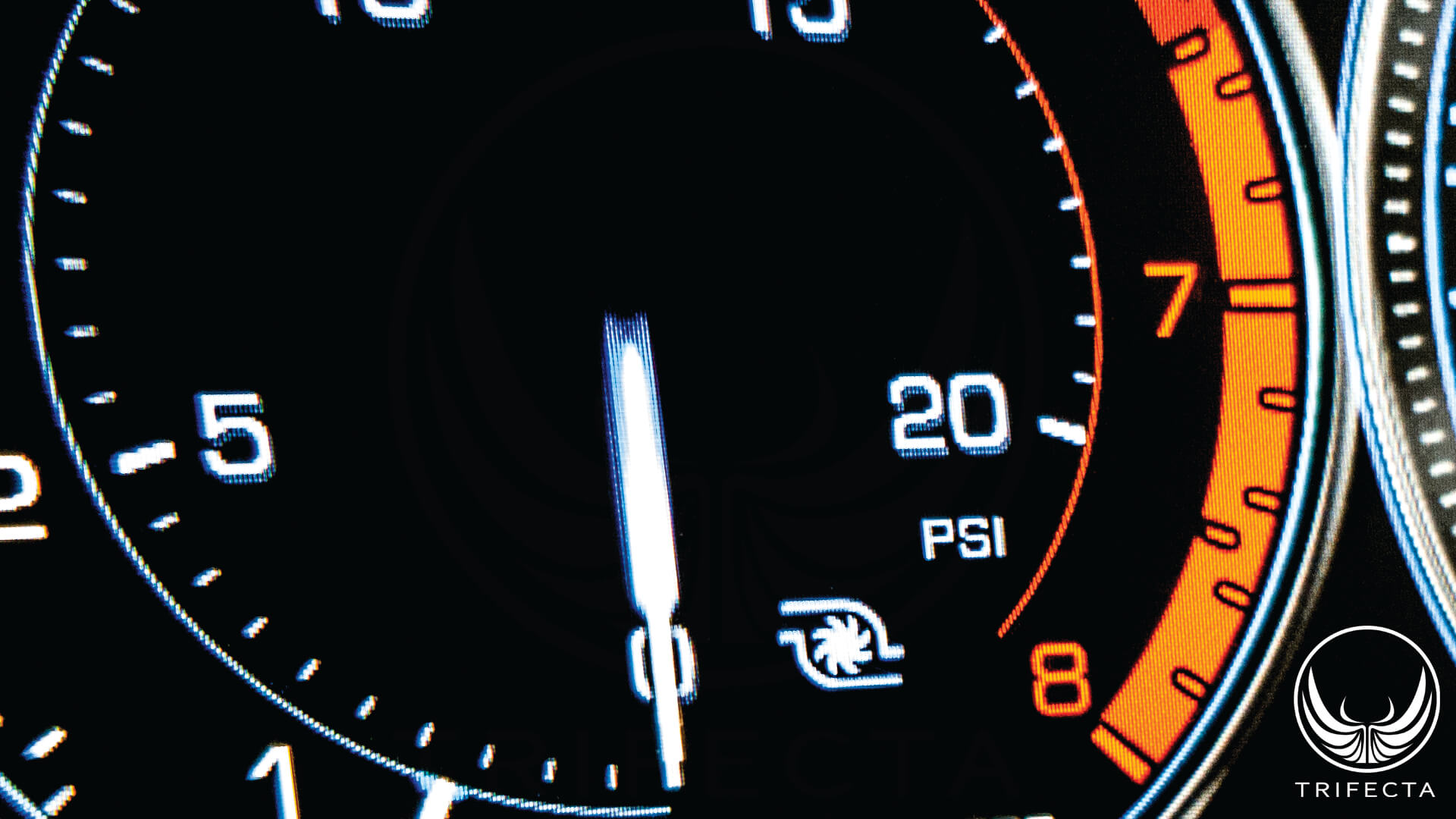 Starting with some MY2016 GM software, TRIFECTA engineers noted that how the ECM reports manifold pressure through the “SAE defined PID (Parameter ID)” was changed. In prior years, this PID would report an 8 bit value, and that 8 bit value would directly correlate to manifold pressure. This means the ECM could report between 0 and 255 kPa of manifold absolute pressure (MAP). In more recent times, it's fairly typical to see in excess of 255 kPa of manifold pressure (approx. 22psi at sea level) on turbocharged vehicles, so there were changes made to the way this PID reports pressure (e.g. it reports less than it used to, in exchange for being able to report a higher number, offset and scaling changes). All of the aftermarket gauges we've seen that calculate “boost” pressure do so by querying the SAE defined PID for barometric pressure, then subtracting it from the MAP. Positive values would be considered “boost” situations. Because of the changes in this MAP PID reporting, these gauges are now making erroneous calculations. In fact, to work around this problem, internally, we switched away from using the SAE defined MAP PID in our datalogging software to a mechanism that has been consistent for years and allows for greater resolution in its reporting. But, yes, the issue here is simply the gauge isn't reporting the boost levels properly – on the stock calibration, or the TRIFECTA calibration because it doesn't understand how the SAE defined MAP PID has been changed for the software in this vehicle. -TRIFECTA SGE Performance Team
 -
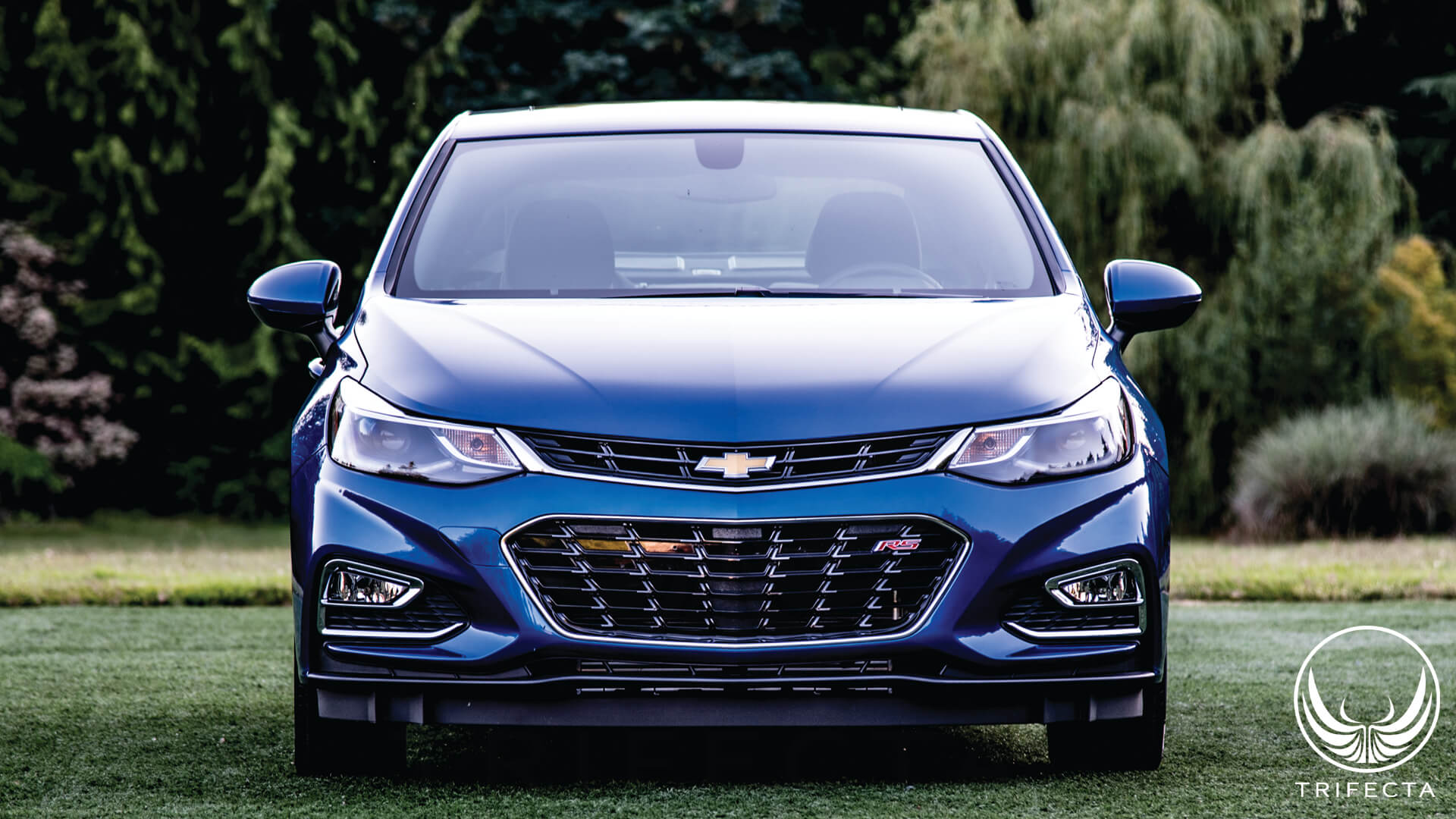 Power Gains Specific gains over factory calibration are up to (uncorrected) 97lb-ft of torque and 59 horsepower, with peak gains showing at up to 74lb-ft of torque and 51 horsepower, with no vehicle modifications beyond the calibration. A Sportier Driving Experience Beyond power gains, and often overlooked by other tuning outfits, TRIFECTA expended a herculean effort to make the new Chevrolet Cruze drive better. Pedal response is dramatically improved across all driving maneuvers. Transmission shifts become predictive, adaptive, and purposeful. With TRIFECTA, the Cruze just wants to go. The car is ready to deliver performance, when you need it, without a big fuss. TRIFECTA Exclusive Features With TRIFECTA's calibration, you also get the kind of features you expect from TRIFECTA. Performance Auto Stop Mode (PASM) recalibrates the auto-stop feature on the fly to deliver instant off-the-line performance by inhibiting auto-stop (when PASM is enabled). Driver Selectable Vehicle Mode (DSVM) allows you to revert to a largely stock-responding vehicle when you feel like just putting around. Both features are activated based on the cruise control arming state (factory cruise control required for both features). More to come Now that TRIFECTA has brought their calibration only package to market, we look forward to developing hardware modifications for the vehicle. High flow exhaust components, and cold air intakes are part of our hardware road map looking forward. Also, support for the 2017 Chevrolet Cruze (including the long-awaited hatch) will be arriving soon! For more detailed information and pricing, see the product page. For inquiries, please feel free to send email to info@trifectaperformance.com or Contact Us.
 -
TRIFECTA: Malibu 1.5L Turbo - Performance Calibration Update
TRIFECTA Performance posted a article in News
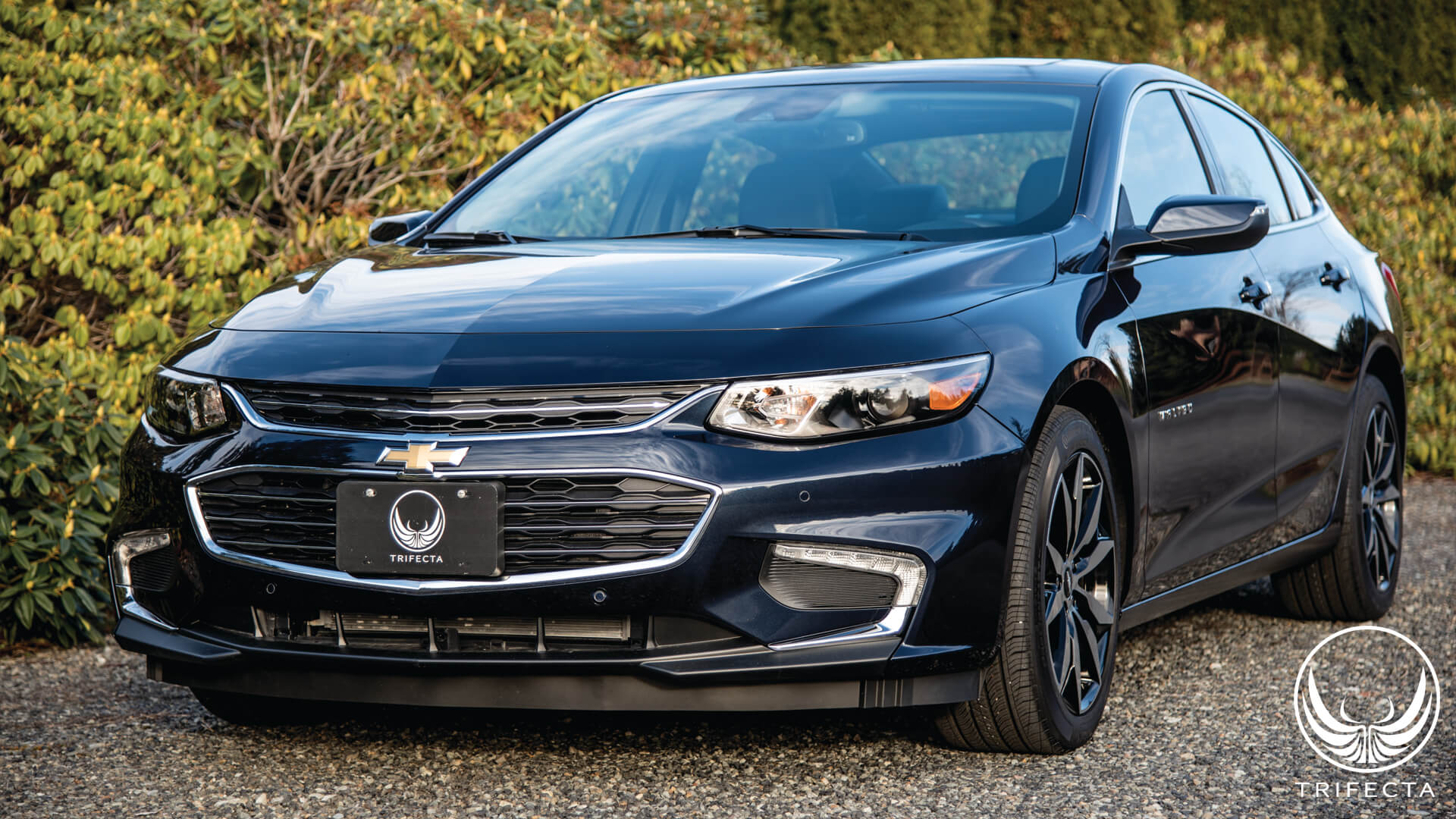 See our original release here: TRIFECTA presents: Chevrolet Malibu (1.5L, 2.0L) MY2016+ Powertrain Calibration Reprogramming (flash tune) Improved feature-set: TRIFECTA's Performance Auto Stop Mode (PASM): Allows the driver to enable a performance-oriented auto-stop mode which, in most cases, inhibits auto-stop from enabling for improved performance character, when desired (triggered by the cruise control arming button) Improved knock detection and control strategies: Reduces incidents of knock when 87 octane fuel is used, or vehicle is operated in adverse environments. Improved driving character: Vehicle responsiveness is improved: Vehicle responds more aptly to throttle input at low speeds, power delivery is more linear under performance situations Transmission shift strategies improved: Shift strategy is largely “factory” at light pedal positions to provide a familiar driving experience, but downshifts are much more progressive and purposeful at higher throttle conditions Transmission firmness improvements: Shifts remain comfortable under cruising conditions, but are more firm at higher throttle conditions This calibration update is now available for all current TRIFECTA customers at no charge, and will be included in future purchases for new TRIFECTA customers with the 2016+ Chevrolet Malibu with the 1.5L turbocharged engine! Full product details can be found here: 2016+ Chevrolet Malibu - 1.5L Turbo - Advantage See our original release here: TRIFECTA presents: Chevrolet Malibu (1.5L, 2.0L) MY2016+ Powertrain Calibration Reprogramming (flash tune)
 -
-
-
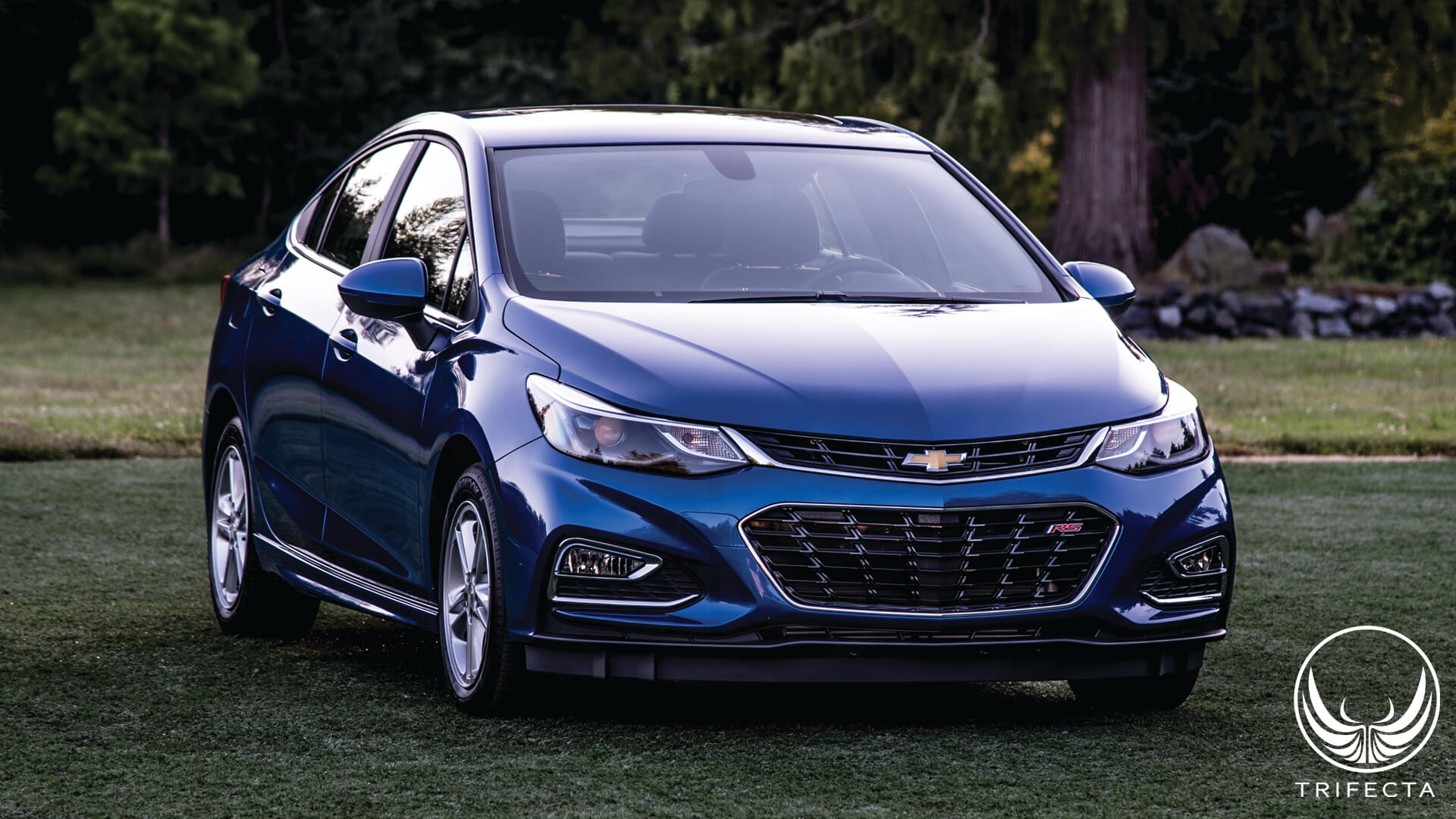
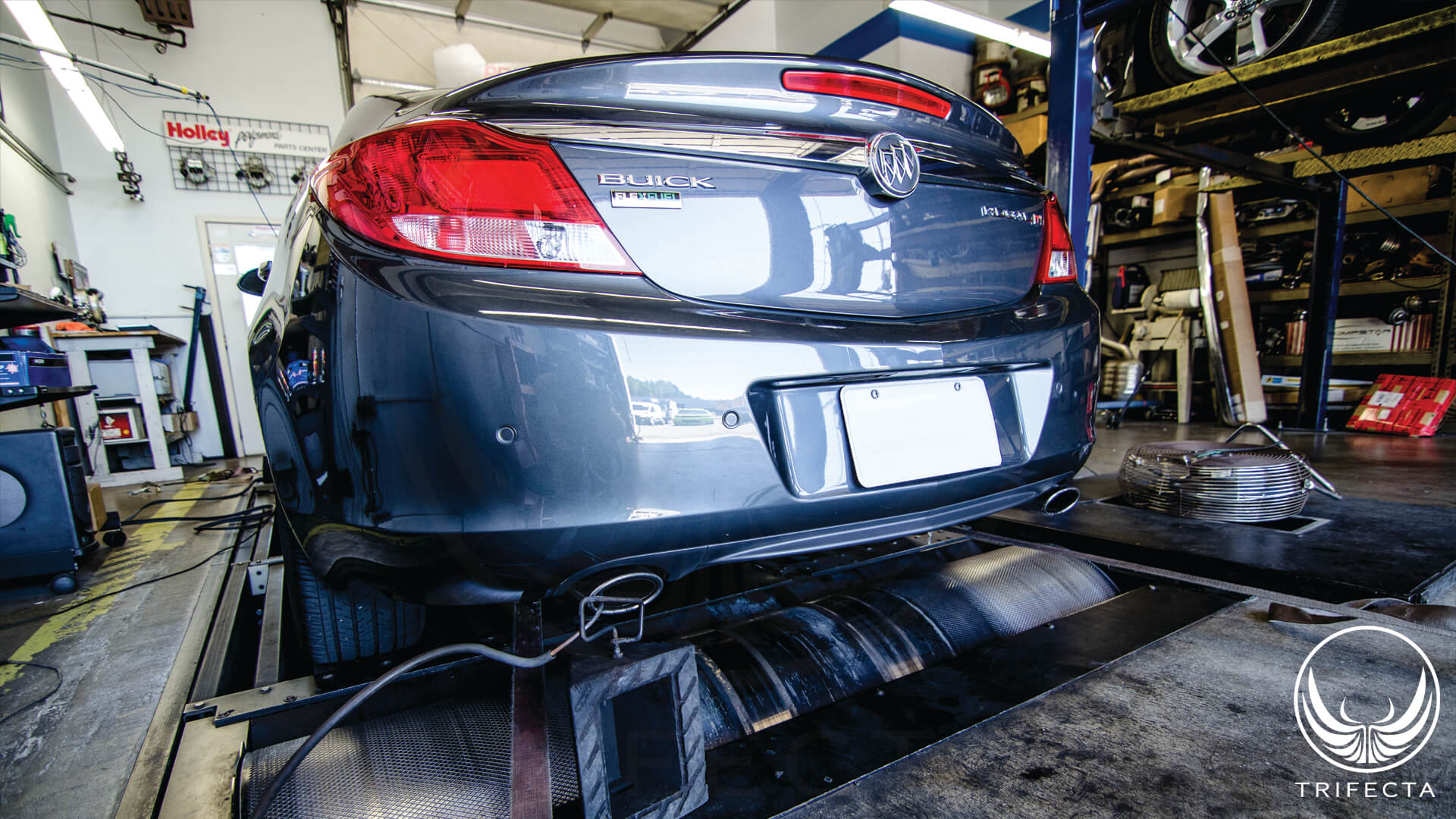
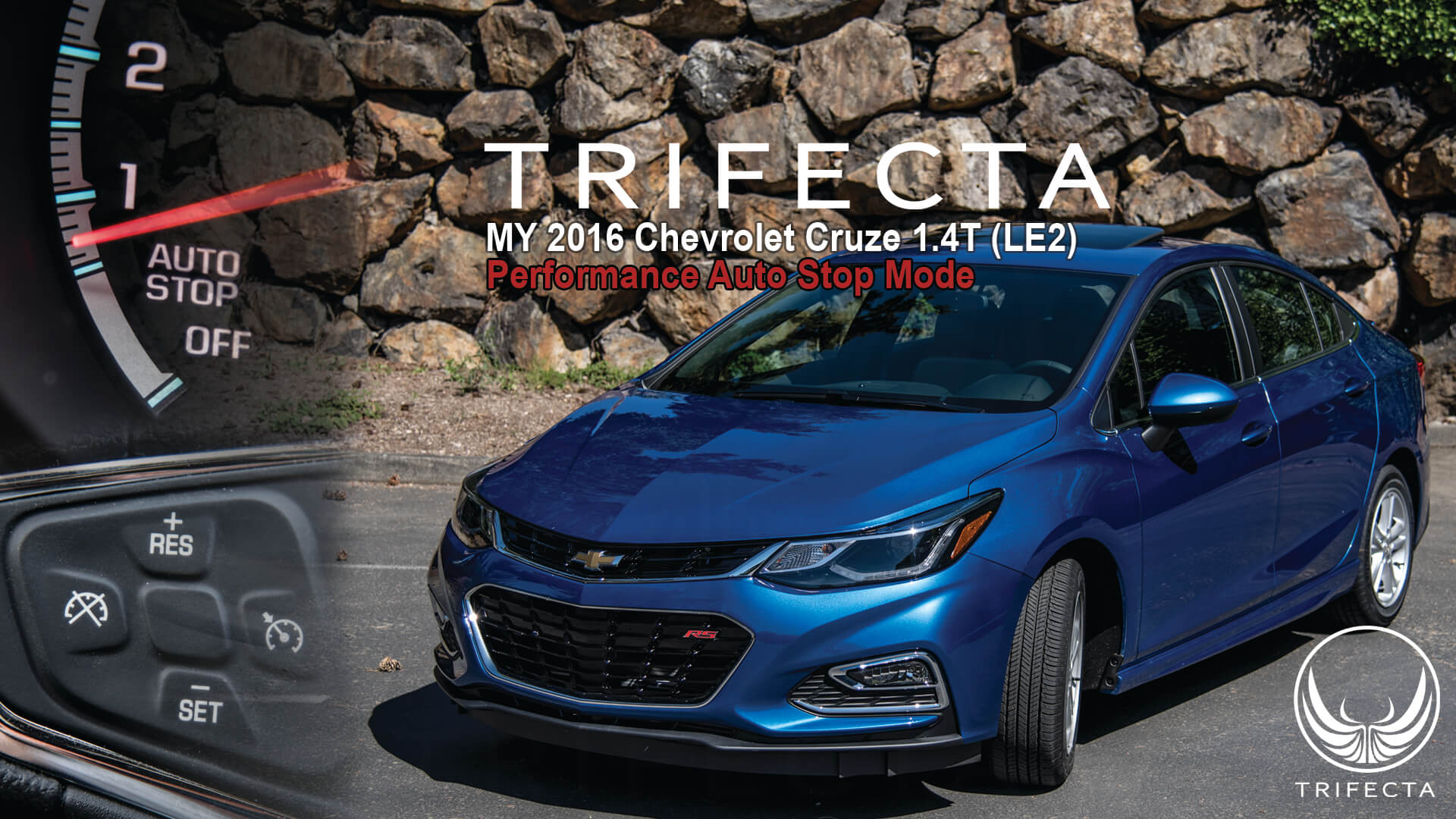 Auto-stop: Behind the technology So, now we know how auto-stop works, what's happening behind the scenes? It turns out there's much more to it than just an engine control module (ECM) controlled starter motor. However, the starter motor is a great place to start in discussing the technology. If you listen to a vehicle start up that has auto-stop technology, you'll note the starter sounds much different than a vehicle with a conventional starter. That's because an auto-stop equipped vehicle will see much higher start motor usage than a vehicle without auto-stop technology. As such, the starter motor has the following upgraded features: High performance electrical windings and characteristics Improved-strength starter pinion gear engagement system Improved design to both reduce starter noise and decrease engine start times In addition to improving the starter motor, battery monitoring technology must be improved as well, to more accurately measure the state of the battery charge. A modest count of auto-stop cycles can lead to a discharged battery relatively quickly since the starter motor requires so much current to operate. In order to more accurately measure the state of charge in the battery, there is an intelligent battery sensor connected to the battery which continuously monitors both the charge state and the overall health of the battery itself. Another major component of the auto-stop system is an auxiliary fluid accumulator for the automatic transmission. This is an ECM-controlled unit which accumulates and captures transmission line pressure from the transmission, and then allows it to be supplied to the transmission to begin clutch engagement when the vehicle is transitioning from auto-stop to engine running mode. Beyond these major components, many subsystems are monitored in order to determine either whether an auto-stop event can be allowed, or if a transition to engine-running should be performed. Conditions to allow auto-stop to occur General vehicle state: Hood is closed Driver's door is closed Driver seatbelt is buckled Vehicle operating conditions: Vehicle is moving less than 3MPH Initial drive cycle reaching 12MPH Engine speed is below 1500 RPM Engine is not in an overheated conditions Transmission is in DRIVE (L or M range disables auto-stop) Brake is depressed No pending or set diagnostic trouble codes for auto-stop (and related) subsystems Auto-stop active for less than 2 minutes Environmental conditions: Warmer than 40*F outside Battery temperature warmer than 32*F and less than 131*F High demands on HVAC system are not requested (inc. defrost) All of the above conditions are continuously monitored, and if any of the criteria fail to be met, the engine will restart. TRIFECTA Performance Auto Stop Mode How it works is simple: When the cruise control subsystem is armed (via the steering wheel button), auto-stop works normally, just as it did from the factory. When the cruise control subsystem is disarmed, auto-stop events are re-calibrated with sport and performance strictly in mind. Furthermore, the feature can be enabled and disabled at any time. For example: If the vehicle is auto-stopped, switching the cruise control subsystem off causes the engine to restart immediately. If the engine is running because no auto-stop event could occur due to the cruise control system being disabled, enabling it will cause the engine to stop immediately, provided all of the other auto-stop criteria above is met as well. All of this, and there is no effect on the operation of the cruise control system. Conclusion We have always prided ourselves on providing value-added features to vehicle owners through our calibration products. TRIFECTA Performance Auto-Stop Mode is no exception, and we believe it will become very popular as more vehicles incorporate auto-stop technology! - TRIFECTA Advanced Software Division
 -
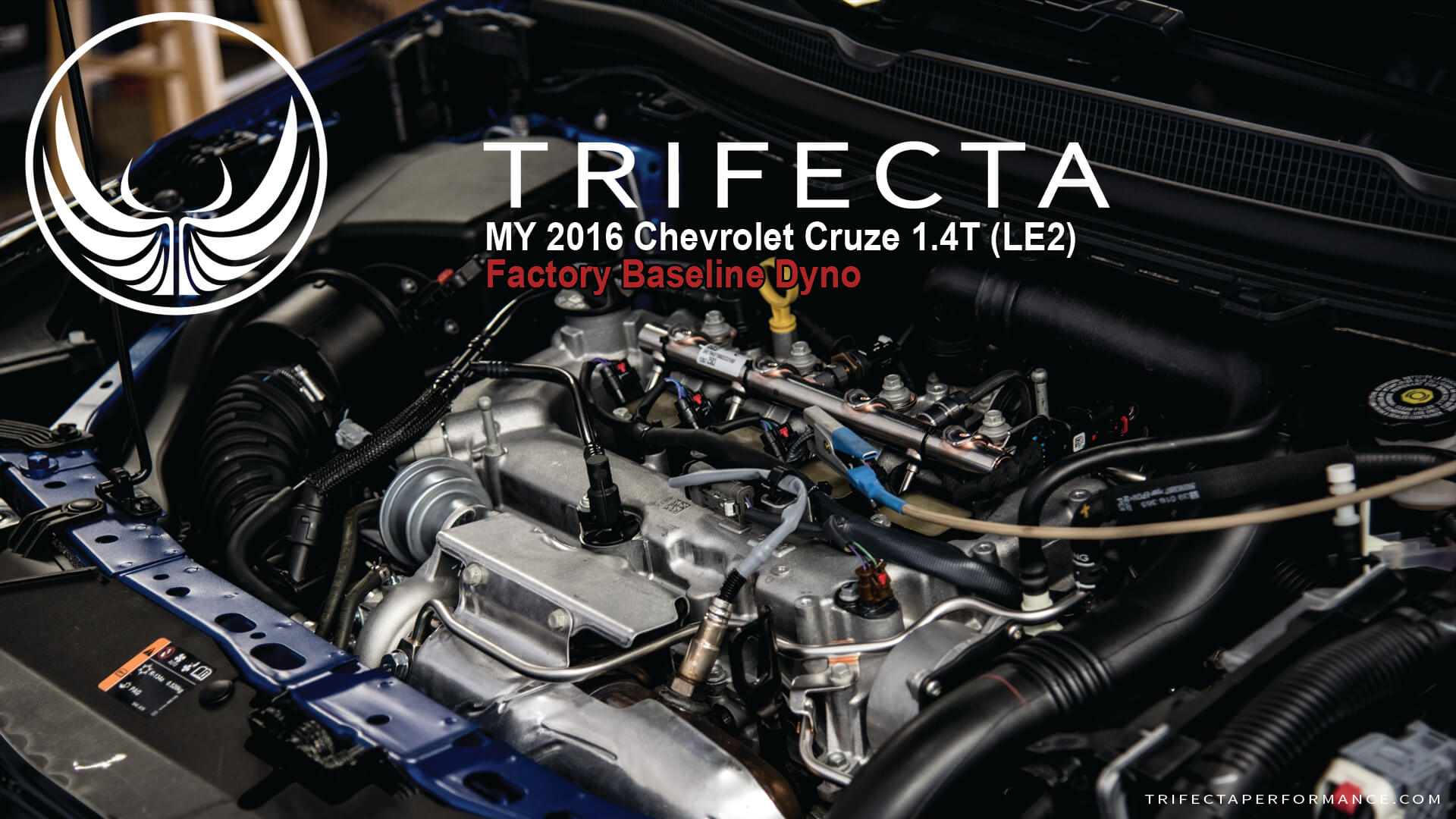 https://vimeo.com/168252702 This automatic transmission development vehicle put down a peak of 125.18 horsepower (HP) and 133.63 lb-ft of torque (TQ) at the wheels (uncorrected) using a dyno-jet chassis dyno. Given drivetrain losses, this is generally in-line with the manufacturer's rated power of 153HP and 177TQ at the crankshaft, particuarly comparing to what a first generation Cruze with an automatic transmission will put down as well. After our engineers collect all of the data from the stock vehicle, the fun part begins - modifying the calibration to find the potential power gains! As we've discussed previously, the LE2 engine represents part of the future for GM, and their small gasoline engines! Stay tuned for more development and progress as we continue developing for the 2016+ Chevrolet Cruze 1.4 Turbo (RPO: LE2)! -TRIFECTA SGE Performance Team
 -
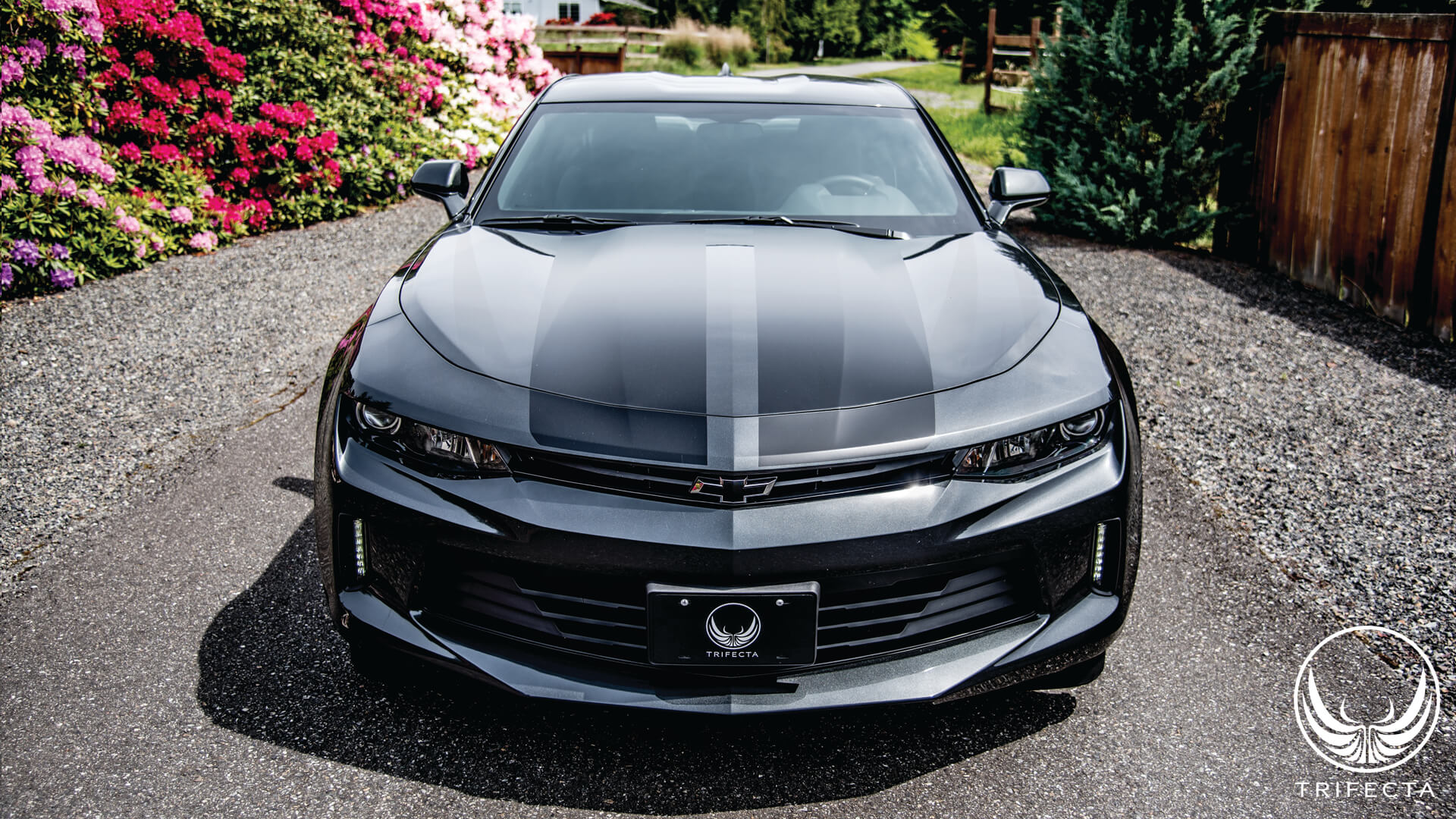 TRIFECTA's 6th Generation Chevrolet Camaro MY2016+ recalibration is complimented by a fully developed 8-speed automatic transmission calibration to support the increased power delivery profile and to offer dramatically improved driving characteristics from everyday driving maneuvers to track performance. The complete powertrain calibration also includes ESC (Stabilitrak) program enhancements. With the current generation of TRIFECTA's flash loader solutions and the optional TRIFECTA Transparency featureset, when flashing your vehicle, the TRIFECTA flash loader does not increment the ECM write counter or increment entries in the flash history. Specifications of the TRIFECTA Performance 6th Generation Chevrolet Camaro MY2016+ ECM software reprogramming: -Fuel economy is improved (up to 2MPG observed), dependent on fuel grade and driving conditions -Retains all GM OE diagnostics and ECM functionality -Retains all OE error code reporting and functionality -Emissions readiness checks are present; emissions compliant -Maintains functionality of ABS and TC systems -Knock detection mechanisms and OE engine knock detection sensitivity is retained -Return to stock functionality included with flash loader Specifications of the TRIFECTA Performance 6th Generation Chevrolet Camaro MY2016+ 8-Speed automatic transmission TCM calibration software reprogramming: -Improved vehicle drive modes (Tour, Sport, Winter) -Improved shift times in adverse shift patterns -Improved shift logic - shifts are progressive and purposeful -Full integration with factory predictive-shifting algorithm in Sport mode -Does not shorten transmission life or increase cooling requirements -Retains all OE diagnostics and TCM functionality -Retains all OE error code reporting and functionality Additional Features: -Extended testing of more than 100,000 miles with 100 hrs + of wide open throttle testing -Powertrain calibration has been tested and validated for various environments, such as cold/heat, elevation, and variations in fuel quality -Octane Adaptive construct enables multi-phased timing tables: Five distinct timing tables replace the OE GM implementation of high/low octane tables -Multi-dimensional Airflow Coefficient tables, adds air pressure bias and knock history overlay for enhanced accuracy in boost scenarios -Virtualized torque prediction coefficients recalculation model added -Airflow based commanded fuel ratio strategies added -Multi-stage knock sensor decay and recovery rate tables added The TRIFECTA Advantage Calibration is meant for 100% stock vehicles. No individualizations or support for parts that do not function on factory calibration (if you have such modifications, be sure to check with us prior to placing order). The TRIFECTA Advantage+ Calibration is meant for vehicles that have modified final drive ratios and/or tire swaps. With this product, customers can request calibration adjustments to correct speedometer / shifting problems introduced by changing front/rear axle gear ratios and/or tire sizes. The TRIFECTA Elite Calibration offers premium tier-1 support. With this product, customers can request specific calibration changes and support for third party hardware. Remote-tuning services are offered with this tier. -This powertrain calibration includes a TRIFECTA powertrain calibration file specific to your vehicle and includes a flash loader device -Premium fuel required for maximum performance and economy -Powertrain calibrations currently exist for the US, CA, EU, RUS/CIS, MEC, and Asia areas, with more regions to follow.
 -
TRIFECTA: 1.4L Turbo Throttle Body Comparison LE2 to LUJ/LUV
TRIFECTA Performance posted a article in News
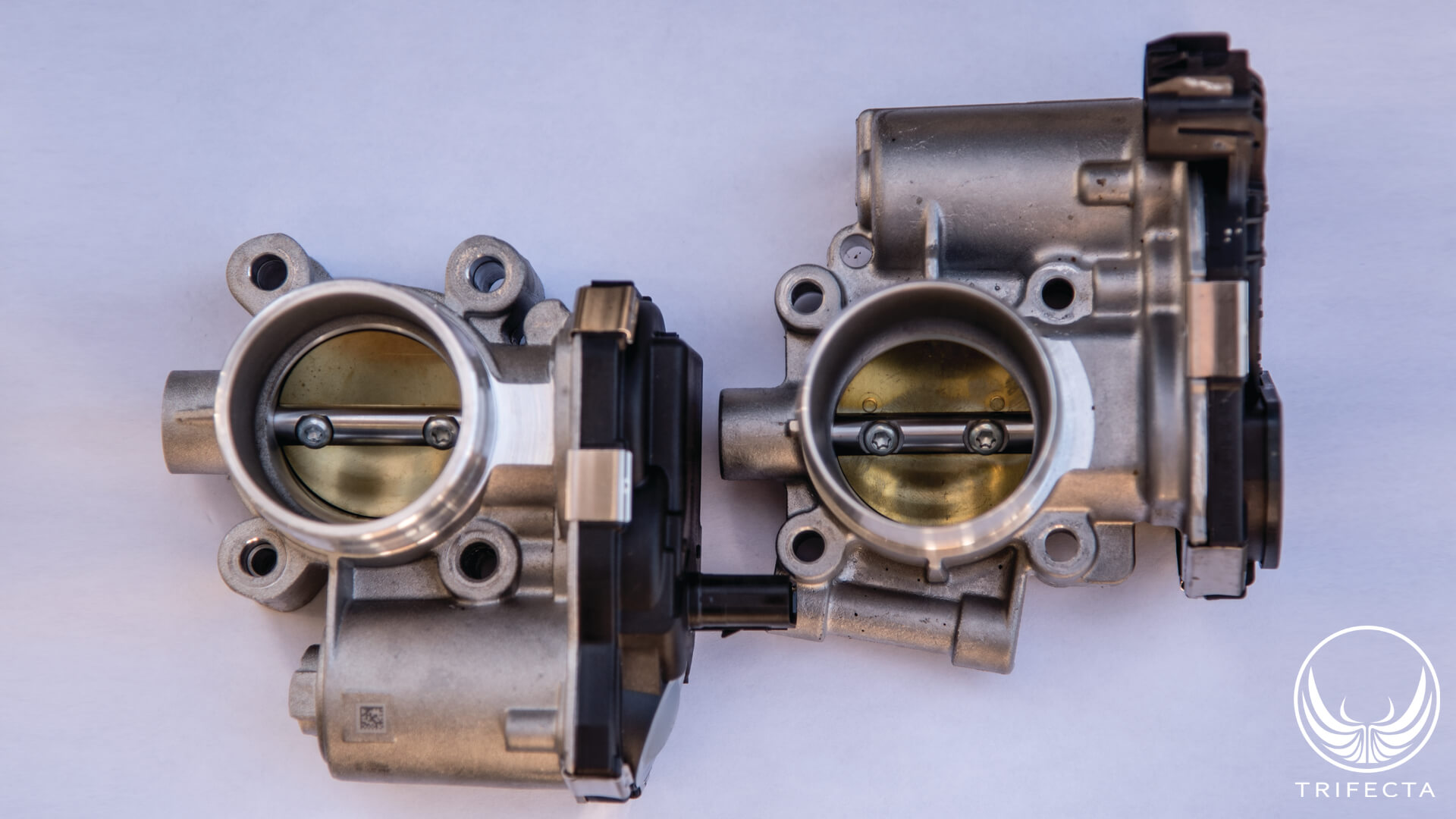 Charge pipe connection to intake manifold LE2 and LUJ/LUV Throttle Body The harness connectors are also different between the two units. Both sport 6 pins, but the LE2 throttle body utilizes a flat connector, whereas the LUJ/LUV throttle body utilizes a rectangular connector. Harness Connectors (LE2 Left, LUJ/LUV Right) Aside from the obvious physical differences, we can't actually see the most stunning difference of all. One of the changes GM has incorporated in recent years is the use of a more-reliable one-way serial data protocol (SAE-J2716 Single Edge Nibble Transmission "SENT" protocol) to digitally transmit the position of the redundant throttle position sensors (TPS) 1 and 2 back to the engine control module (ECM). In contrast, the LUJ/LUV uses 5 volt referenced analog/resistive throttle position sensors 1 and 2 to report the position of the throttle blade back to the ECM. Why switch to SENT? There are many reasons, not the least of which is the SENT protocol defines a checksum scheme that allows the ECM to verify the accuracy of the information being sent from the throttle body. Failures in "drive by wire" throttle control schemes (such as are used on both the LE2 and the LUJ/LUV) are a constant worry and concern of auto manufacturers as they could lead to uncontrolled wide-open-throttle conditions. The predecessor to SENT has redundancy built in by providing two sensors that report opposite voltages, allowing the ECM to perform some level of plausibility checks, but in the event that both sensors are incorrectly reporting the throttle position (but correctly reporting their opposing voltages), the ECM may not be able to detect a throttle control error. SENT helps to alleviate some of these scenarios. It's an exciting time for automotive technology! Stay tuned as TRIFECTA continues to shed light on emerging automotive technologies! TRIFECTA SGE Performance Team
 -
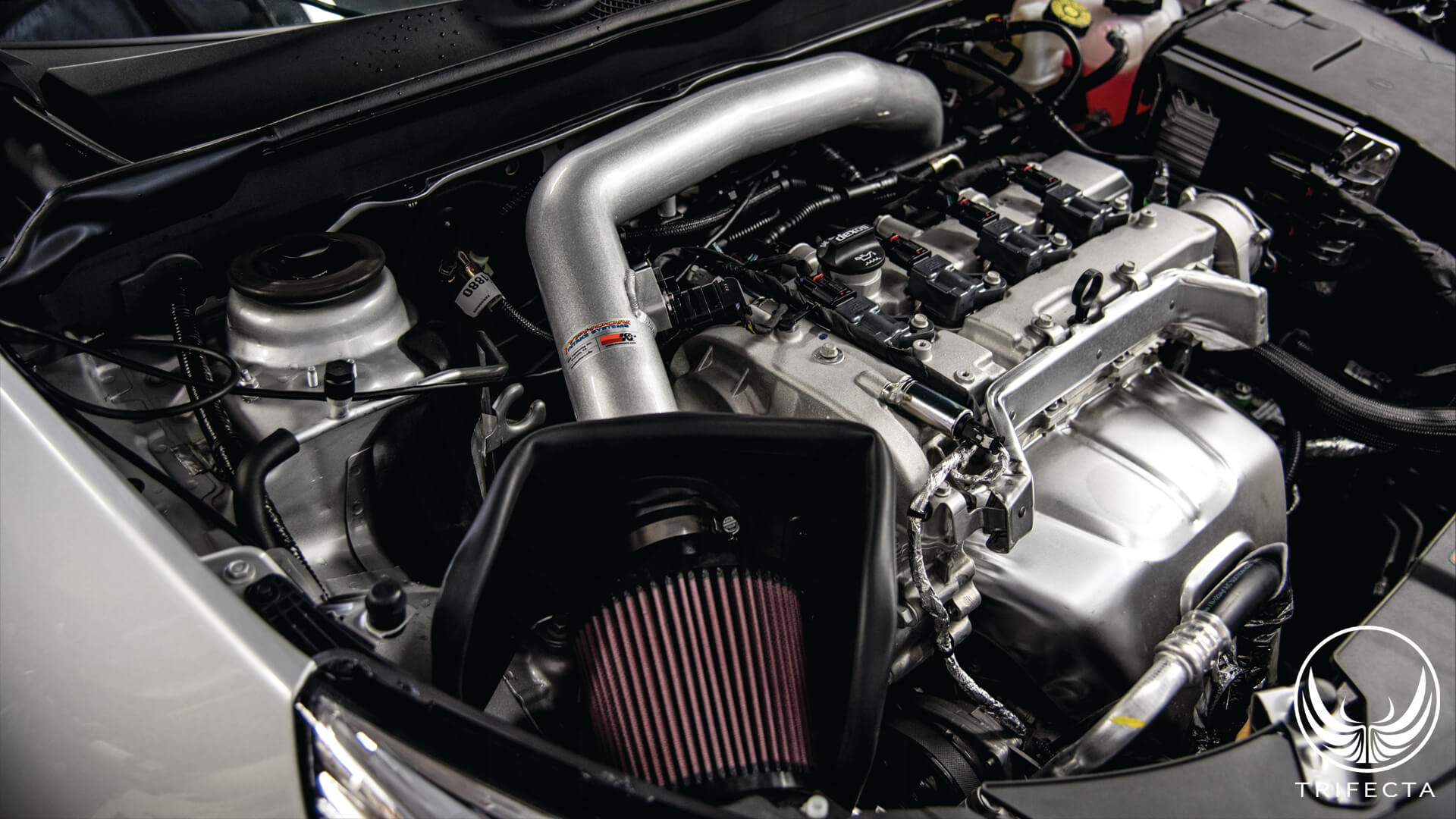 click for full size TRIFECTA K&N-Specific Calibration Details: Specific Gains TRIFECTA Calibration vs Stock: +29 HP @ 6660rpm +23 ft-lbs @ 6660rpm TRIFECTA K&N Calibration vs Stock: +43 HP @ 6670rpm +34 ft-lbs @ 6670rpm TRIFECTA K&N Calibration vs Factory Airbox w/ TRIFECTA Calibration: +20 HP @ 3830rpm +28 ft-lbs @ 3830rpm click for full size K&N Manufacturer Details: P/N: 69-4529TS Built for performance and show, the K&N Typhoon Air Intake System is a free-flowing mandrel-bent aluminum tube induction system designed to fit many sport compact performance vehicles. Each kit is proven on a rear-wheel dynamometer to increase horsepower and torque. The K&N Typhoon Cold Air Intake System is available in an assortment of powder coated colors and polished aluminum, these kits are sure to please in every way. They come with an oversized High-Flow conical air filter designed to provide increased surface area and dust capacity. This extra surface area provides even more airflow at lower restriction than a standard K&N O/E replacement filter that is limited to the size of the factory air box. The oversize air filter also captures more dirt increasing the service life before a cleaning is required (up to 100,000 miles). Designed for increased performance for your sport compacts, utilizing the finest quality components Guaranteed to Provide more horsepower and increased acceleration Available in high-quality finishes Includes K&N High-Flow, Washable/Reusable Air Filter Some applications available in cold-air versions Easy to Install Million Mile Limited Warranty Available Information: Installation Instruction Sheet This item only available for sale with a TRIFECTA calibration. Not CARB legal: Not for sale or street use in CA & CARB states.
 -
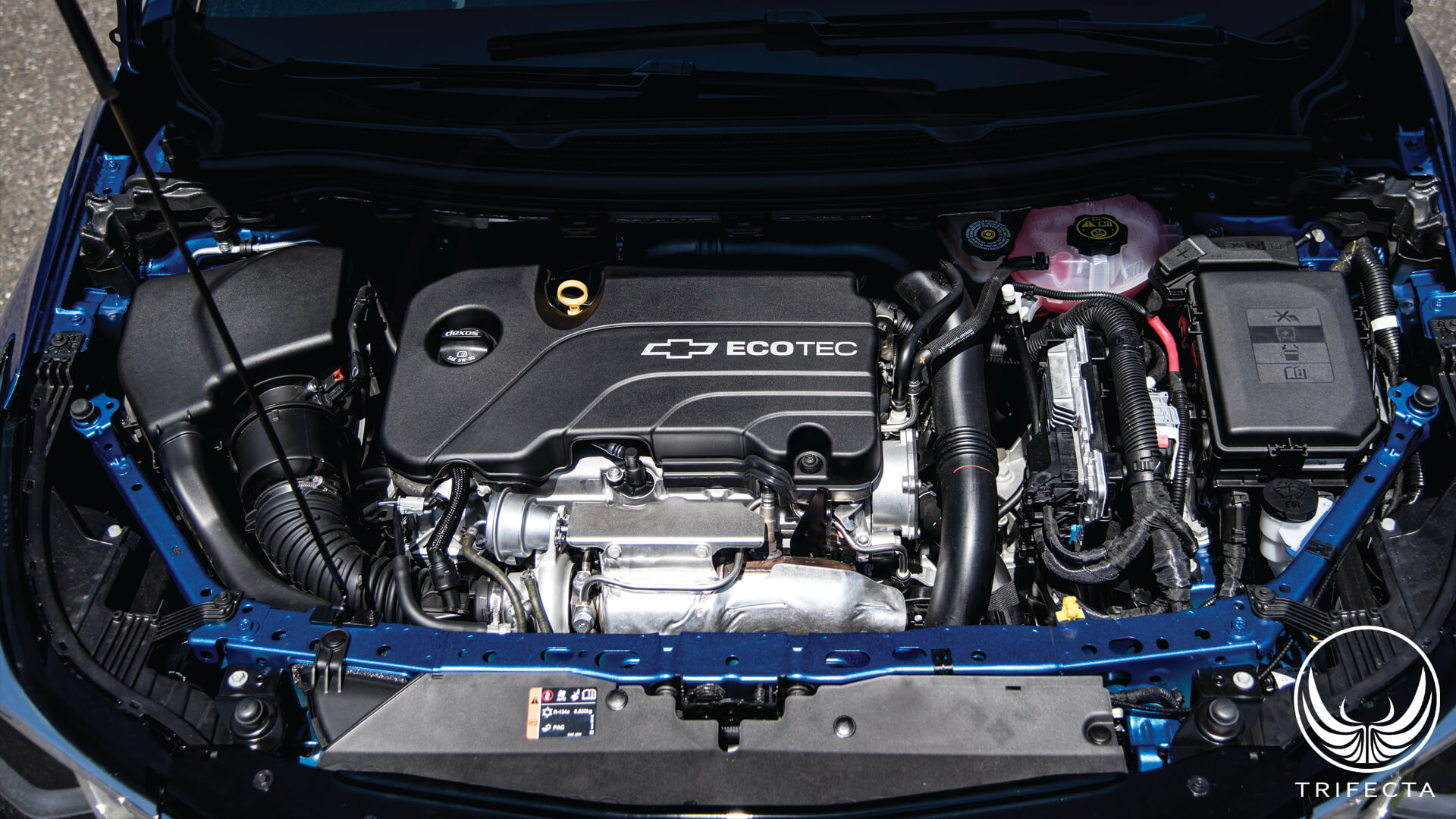 Small Gasoline Engine (SGE) SGE family engines range in displacement from 1.0L (three cylinder) to 1.5L. All use a common bore size of 74mm, and there are three stroke configurations available - 77.4mm, 81.3mm, and 86.6mm (and as such, all engines are considered "undersquare" where the stroke is longer than the bore size). At the time of writing there were four SGE engines either in use or scheduled to be in use in the United States: RPO: LV7 - 1.4L naturally aspirated, multi point fuel injected (MPFI). Used in the 2016+ Chevrolet Spark, making 98HP and 94 lb-ft torque. Bore/stroke is 74mm/81.3mm. RPO: LE2 - 1.4L turbocharged, spark ignited direct injected (SIDI). Used in the 2016+ "gen II" Chevrolet Cruze, and the 2016+ Buick Encore Sport Touring Edition, making 153HP and 177 lb-ft torque. Bore/stroke is 74mm/81.3mm. RPO: L3A - 1.5L naturally aspirated, spark ignited direct injected (SIDI). Used in the 2017+ "gen II" Chevrolet Volt, making 100HP and 103 lb-ft torque. Bore/stroke is 74mm/86.6mm. RPO: LFV - 1.5L turbocharged, spark ignited direct injected (SIDI). Used in the 2016+ Chevrolet Malibu, making 163HP and 184 lb-ft torque. Bore/stroke is 74mm/86.6mm. The SGE family is slated to replace three different, older GM engine families, S-TEC, Family 0, and Family 1. Comparison of LE2 to the LUJ/LUV (Family 0, outgoing Cruze turbo engine) When just looking at the numbers, it might be simple to conclude the LE2 is simply a direct-injected variant of the LUJ/LUV, but that's not really the case at all. The LE2 is a clean-sheet redesign, and, while it shares some characteristics with the LUJ/LUV, there's actually more different about it, than similar. In fact, even the bore and stroke are different! While both are technically called "1.4L" displacement engines, in reality the LE2 is slightly larger than the LUJ/LUV. The LE2 displaces 1399cc, and the LUJ/LUV displaces 1364cc. The LE2 uses a 74mm bore with an 81.3mm stroke, and the LUJ/LUV uses a 72.5mm bore with an 82.6mm stroke (making the LE2 closer to "square" than the LUJ/LUV). Moving on to the engine block, the LE2 uses an all-aluminum engine block whereas the LUJ/LUV uses a cast iron engine block. The LE2 uses a forged steel crankshaft whereas the LUJ/LUV is not forged. The piston wrist pins are fully floating in the LE2, in contrast, the wrist pin is pressed into the connecting rod with the LUJ/LUV. Both use an aluminum cylinder head, with four valves per cylinder, actuated by camshafts located in the cylinder head (DOHC). Both engines utilize independent variable valve timing (VVT) on both the intake and exhaust camshafts. Covering the camshafts on the LE2 is an aluminum valve cover which provides superior valve train noise suppression, whereas the LUJ/LUV uses a composite valve cover with integrated PCV assembly (which is prone to failure on earlier LUJ/LUV engines). Noise suppression was an important goal of the SGE design, and one drive of the 2016+ "gen II" Chevrolet Cruze showcases the work GM did in this area. The direct-injectors, which are normally quite loud are isolated from the valve cover using bushings, and underneath the engine cover is a large piece of noise-suppressing foam. One feature that's trickled down from the modern GM V6 (high feature V6) family into the SGE family is the integrated exhaust manifold. Put another way, there is NO separate exhaust manifold on the LE2, just one exhaust "port" in the cylinder head. This allows extremely close coupling of either a turbocharger, or a catalytic converter to the cylinder head for optimum performance and lower emissions. Because of the lighter materials and integrated engine design, the LE2 weighs in at a whopping 44 pounds less than the LUJ/LUV. On the fueling side, the LE2 uses spark ignited direct injection (SIDI) and the LUJ/LUV uses multi point fuel injection (MPFI). As such, the LE2 uses a much different piston design (featuring a toroidal / ovoidal shaped combustion cavity in the piston head for optimized SIDI operation). Because the LE2 uses SIDI, it borrows technology traditionally found in diesel engines. The LE2 features a common rail for the injectors, and a mechanically driven (by the intake camshaft) high pressure fuel pump complete with a high pressure rail pressure sensor. On the LE2, each cylinder's injector is located in the cylinder head, adjacent to the spark plug, in the valley between the two camshafts. LE2 Direct Injector On the LUJ/LUV, being the engine is MPFI, each fuel injector is located in the intake manifold, just before the intake valve, serviced by a ECU-controlled, variable (low) pressure fuel pump (the LE2 also features an ECU-controlled variable low pressure fuel pump to feed the mechanical high pressure pump). LUJ/LUV MPFI rail and injectors We also find some differences in the ignition system. The LE2 features a per-cylinder, independent "coil on plug" ignition system, with the spark plugs located at an angle in the cylinder head, again an optimization for the SIDI fuel system. In contrast, the LUJ/LUV features a single "coil pack" which houses all four ignition coils (also a common failure point on this engine). The LUJ/LUV spark plugs are not angled. LE2 Angled Spark Plug On the exhaust side of the engines, things could not be more different. While both have a "forward facing" exhaust port configuration (and, hence the turbocharger is located towards the front of the vehicle in both engines), as mentioned previously, the LE2 sports an integrated cylinder head / exhaust manifold design with a single exhaust "port" which the turbocharger assembly is directly bolted to. The LUJ/LUV features a traditional exhaust port configuration in the cylinder head, but the exhaust manifold and turbocharger turbine assembly are cast as one piece, in iron. Both use a spring-loaded-closed wastegate design (controlled by an ECM-driven boost control solenoid) with the turbocharger to control the turbine/compressor speed, but the LE2 uses a fully electronic bypass valve (like the LTG, LF3 and LF4 turbo engines) whereas the LUJ/LUV uses a more traditional mechanical bypass valve (controlled by the ECM via a solenoid). Studying the compressor maps for the LE2 turbo, we find a turbocharger that can move more air, more efficiently, at a lower compressor RPM (the LE2 turbocharger only needs to spin at ~200000 RPM to do what the LUJ/LUV does at ~270000 RPM). LE2 Turbocharger Assembly LUJ/LUV Turbocharger Assembly Catalytic converters like it hot, and with the LE2, the catalytic converter is located even closer to the turbocharger outlet for superior emissions control. The LUJ/LUV catalytic converter is located further downstream due to packaging constraints. LE2 Catalytic Converter To drive the new LE2 engine, an upgraded engine control module (ECM) is required. The new generation "E80" SIDI ECM has seen service in vehicles starting in 2015, and in the Cruze, is replacing the "E78" MPFI ECM used to drive the LUJ/LUV. LE2 E80 ECM One feature that the LUJ/LUV has, which the LE2 does not, is an ECM-controlled variable thermostat. In the LUJ/LUV engine, the ECM dictates the desired engine coolant temperature and can control it by applying current to an electronic thermostat to either cause it to open at a lower, or higher temperature, depending on driver demand, cooling system demand, and other criteria. Fuel Economy Because of the efficiency of the new LE2, the new 2016+ Chevrolet Cruze does not offer an ECO-specific variant, only the choice of manual or automatic transmission (as well as several trim levels: L, LS, LT, and Premier). According to GM, the manual transmission reaches up to 42MPG on the highway and the automatic transmission reaches up to 40MPG on the highway. With the LUJ/LUV, according to GM, fuel economy is up to 42MPG with the ECO manual transmission and up to 38MPG on the highway with the ECO automatic. Also, the new 2016+ Chevrolet Cruze features start/stop technology. When the vehicle is stopped, provided other criteria are met, the engine shuts off to avoid wasting fuel while sitting at a stop light. When the driver takes their foot off the brake, the engine starts again, seamlessly. So, what about power? The LE2 is factory-rated at 153HP (5600 RPM) and 177lb-ft torque (2000-4000 RPM). The LUJ/LUV is factory-rated at 139HP (4900-6000 RPM) and 149 lb-ft of torque (1850-4900 RPM). TRIFECTA's testing suggests that calibration changes will yield similar gains in the LE2 vs the LUJ/LUV. Summary An exciting new era is upon us! GM says the SGE family will replace all of the existing small gasoline-powered engines in their lineup by the end of the decade, so look to find the LE2 (or some variant of it) in all LUJ/LUV applications over the next few years, as well as more wide-spread use of the LFV (1.5L SIDI turbocharged SGE). TRIFECTA is more than excited to lead the aftermarket of the SGE family into the future!
 -
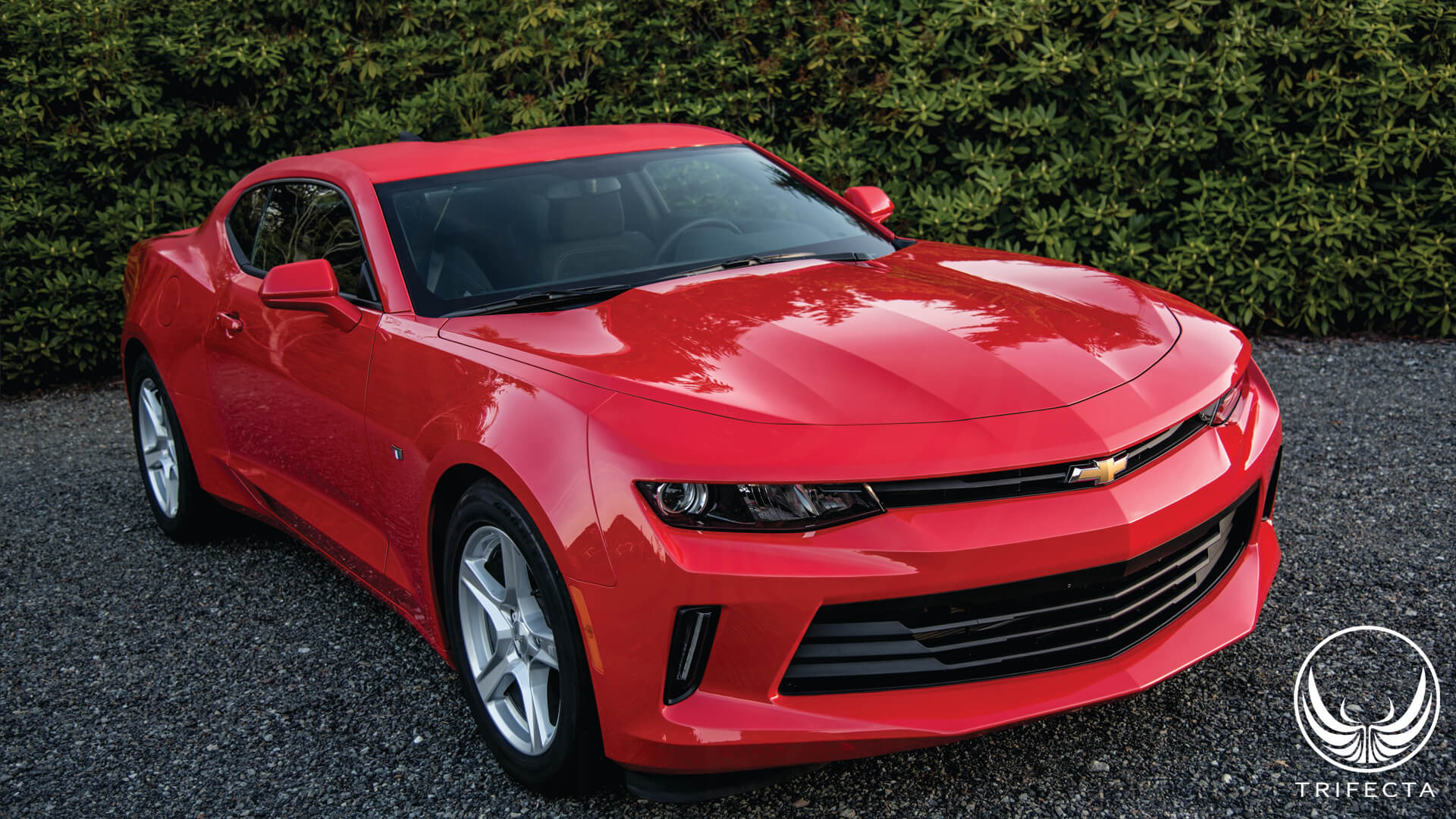 TRIFECTA presents a complete powertrain power delivery profile calibration for the 6th Generation MY2016+ Chevrolet Camaro 3.6L (RPO: LGX) engine and corresponding 8-speed 8L45 (RPO: M5T) automatic transmission reprogramming. The TRIFECTA Performance Chevrolet Camaro 3.6L LGX powertrain calibration is an easy to install software performance calibration with an included flash loader device (EZ Flash Cable) that will yield gains of +17 ft-lbs and +23 WHP (Peak gains of +8 ft-lbs and +22 WHP) to a completely stock Chevrolet Camaro 3.6L LGX. The TRIFECTA Powertrain Calibration for the 6th Generation MY2016+ Chevrolet Camaro includes a TRIFECTA flash loader. Specifications of the TRIFECTA Performance 6th Generation MY2016+ Chevrolet Camaro 3.6L LGX ECM software reprogramming: -Gains of +17 ft-lbs and +23 WHP under the curve (and +8 ft-lbs and +22 WHP peak on 91 octane) -Powertrain calibration has been tested and validated for various environments, such as cold/heat, elevation, and variations in fuel quality -Power feels linear and immediately responsive (improved drivability and throttle attentiveness) -Retains all GM OE diagnostics and ECM functionality -Retains all OE error code reporting and functionality -Emissions readiness checks are present; emissions compliant -Maintains functionality of ABS and TC systems -Knock detection mechanisms and OE engine knock detection sensitivity is retained -The TRIFECTA flash loader and Transparency featureset does not increment the ECM write counter or increment entries in the flash history -Return to stock functionality included with flash loader Specifications of the TRIFECTA Performance 6th Generation MY2016+ Chevrolet Camaro 8L45 8-Speed automatic transmission TCM calibration software reprogramming: -Supplementary 8L45 transmission TCM reprogramming compliments the ECM reprogramming and completes the TRIFECTA Powertrain Calibration: designed to work in unison with the ECM reprogramming for optimized performance -Improved shift times in adverse shift patterns -Improved shift logic (improved drivability) -Does not shorten transmission life or increase cooling requirements -Retains all OE diagnostics and TCM functionality -Retains all OE error code reporting and functionality -Improved fuel economy with improvements made to torque converter slip profiles -Retains all factory drive modes: Tour, Sport, Winter, and Track (if applicable) Supplementary Featureset of the TRIFECTA Performance 6th Generation MY2016+ Chevrolet Camaro powertrain calibration software reprogramming: -TRIFECTA DSVM (Driver Selectable Vehicle Modes) "Select-a-AFM": Actuate AFM (Active Fuel Management) via the Drive Mode Selector. Tour Mode = AFM (V4 Mode) Enabled Sport Mode = AFM (V4 Mode) Disabled Installation Notes: -Estimated installation time of ~20 minutes -Premium fuel is recommended, but not required 3.6 LGX dyno (on 91 octane pump gas) (this vehicle is a 2016 Chevrolet Camaro with the 3.6 LGX engine) - stock wheels/tires Official dyno video: https://vimeo.com/164187884 Dyno video showcasing gear-to-gear power-drop testing for shift optimization: https://vimeo.com/164187883 Additional information and availability: - This powertrain calibration includes a TRIFECTA powertrain calibration file specific to your vehicle and includes a flash loader device - Powertrain calibrations currently exist for North American vehicles only, with more regions to follow - Estimated availability in North America: 05/15/16 The TRIFECTA Advantage Calibration is meant for 100% stock vehicles. No individualizations or support for parts that do not function on factory calibration (if you have such modifications, be sure to check with us prior to placing order). The TRIFECTA Advantage+ Calibration is meant for vehicles that have modified final drive ratios and/or tire swaps. With this product, customers can request calibration adjustments to correct speedometer / shifting problems introduced by changing front/rear axle gear ratios and/or tire sizes. The TRIFECTA Elite Calibration offers premium tier-1 support. With this product, customers can request specific calibration changes and support for third party hardware. Remote-tuning services are offered with this tier.
 -
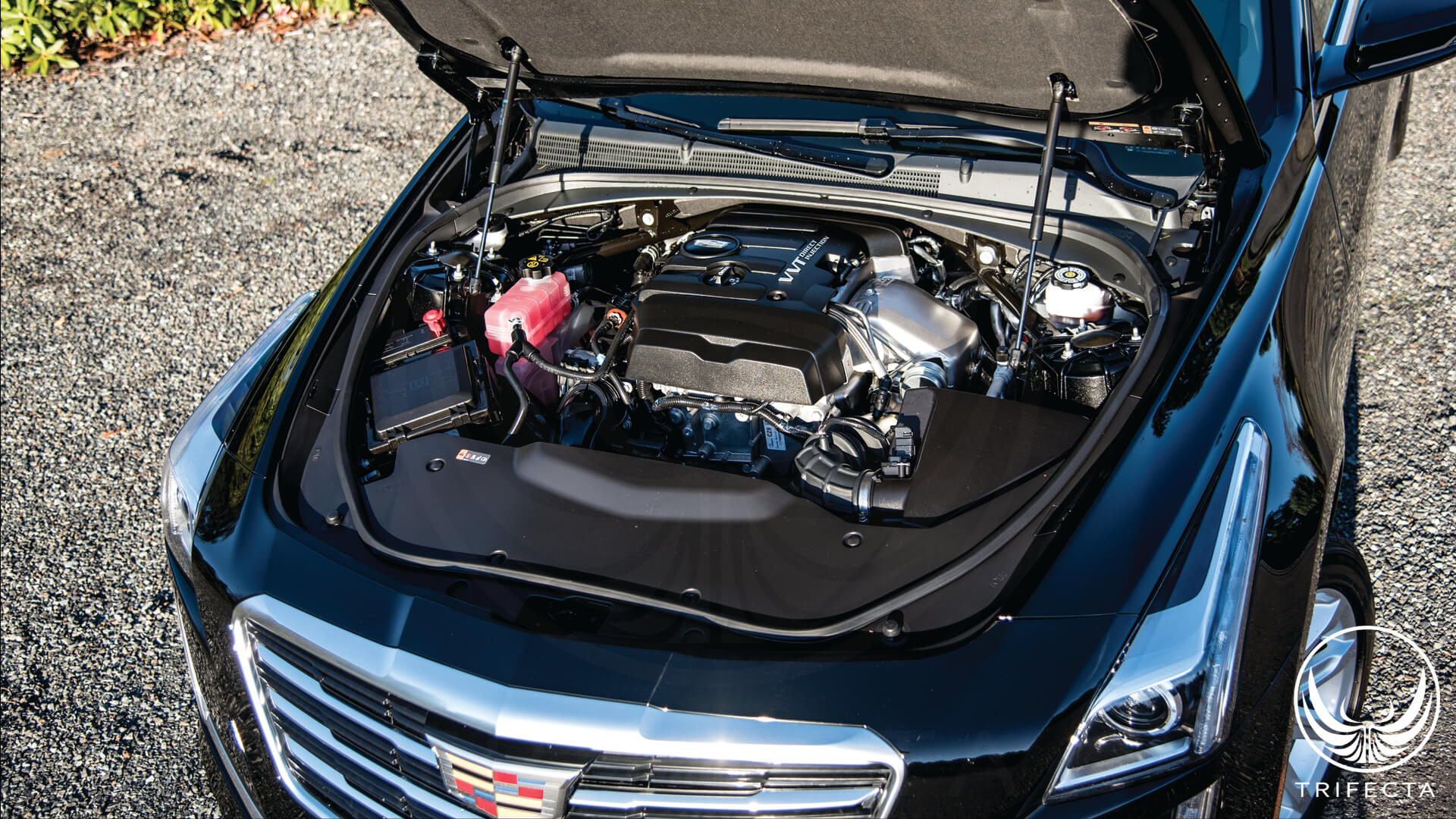 TRIFECTA's 2014--2016+ Cadillac CTS recalibration is complimented by a fully developed 8-speed or 6-speed transmission calibration to support the increased power delivery profile and to offer dramatically improved driving characteristics from everyday driving maneuvers to track performance. The complete powertrain calibration also includes ESC (Stabilitrak) and, for all wheel drive (AWD) equipped models, TCCM (transfer case control module) program enhancements. With the current generation of TRIFECTA's flash loader solutions and the optional TRIFECTA Transparency featureset, when flashing your vehicle, the TRIFECTA flash loader does not increment the ECM write counter or increment entries in the flash history. Specifications of the TRIFECTA Performance 2014--2016+ Cadillac CTS ECM software reprogramming: -Fuel economy is improved (up to 2MPG observed), dependent on fuel grade and driving conditions -Retains all GM OE diagnostics and ECM functionality -Retains all OE error code reporting and functionality -Emissions readiness checks are present; emissions compliant -Maintains functionality of ABS and TC systems -Knock detection mechanisms and OE engine knock detection sensitivity is retained -Return to stock functionality included with flash loader Specifications of the TRIFECTA Performance 2014--2016+ Cadillac CTS 8-Speed and 6-Speed automatic transmission TCM calibration software reprogramming: -Improved vehicle drive modes (Tour, Sport, Winter) -Improved shift times in adverse shift patterns -Improved shift logic - shifts are progressive and purposeful -Full integration with factory predictive-shifting algorithm in Sport mode -Does not shorten transmission life or increase cooling requirements -Retains all OE diagnostics and TCM functionality -Retains all OE error code reporting and functionality Additional Features: -Extended testing of more than 100,000 miles with 100 hrs + of wide open throttle testing -Powertrain calibration has been tested and validated for various environments, such as cold/heat, elevation, and variations in fuel quality -Octane Adaptive construct enables multi-phased timing tables: Five distinct timing tables replace the OE GM implementation of high/low octane tables -Multi-dimensional Airflow Coefficient tables, adds air pressure bias and knock history overlay for enhanced accuracy in boost scenarios -Virtualized torque prediction coefficients recalculation model added -Airflow based commanded fuel ratio strategies added -Multi-stage knock sensor decay and recovery rate tables added The TRIFECTA Advantage Calibration is meant for 100% stock vehicles. No individualizations or support for parts that do not function on factory calibration (if you have such modifications, be sure to check with us prior to placing order). Remote tuning service not available with this package. -This powertrain calibration includes a TRIFECTA powertrain calibration file specific to your vehicle and includes a flash loader device -Premium fuel required for maximum performance and economy -Powertrain calibrations currently exist for the US, CA, EU, RUS/CIS, MEC, and Asia areas, with more regions to follow.
 -
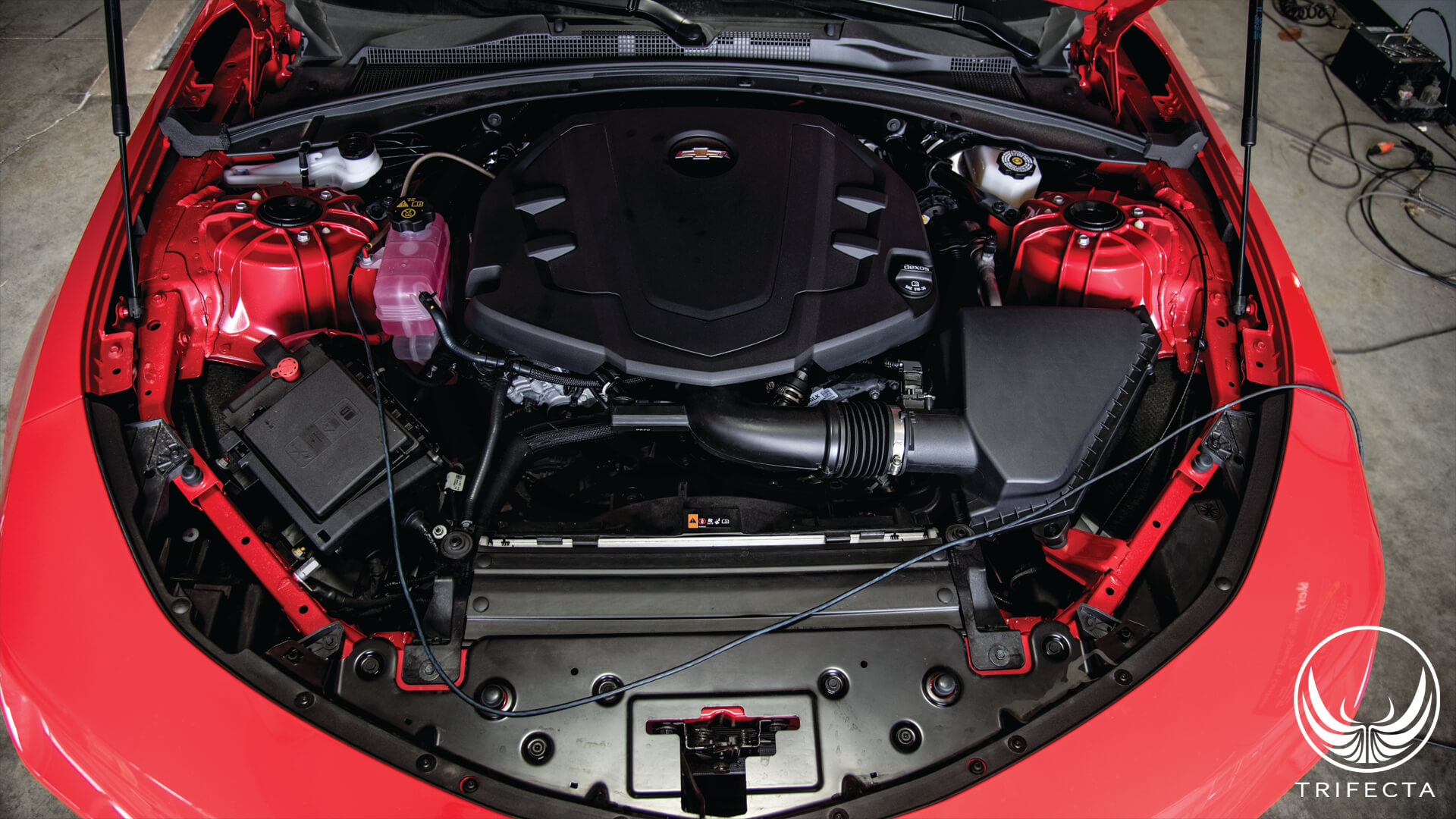
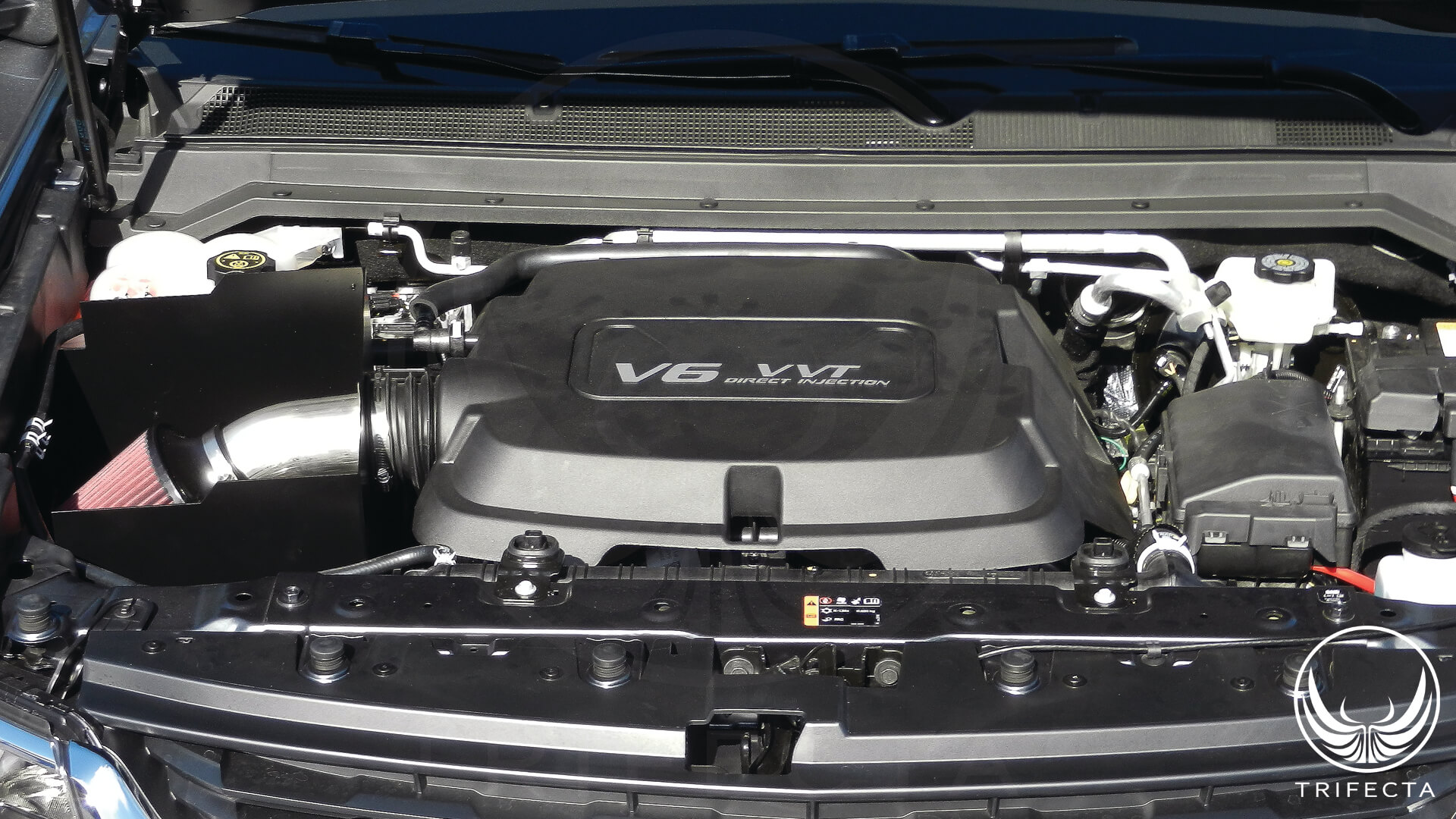 TRIFECTA Cold Air Intake (CAI) for 2015+ GM Mid Size Truck (Chevrolet Colorado and GMC Canyon) with the V6 LFX Engine Features: Improved airflow over the factory airbox which increases horsepower, torque, and fuel economy Gives the truck an exciting and sporty note under heavy acceleration Modular design allows for either retention, or optional deletion of the engine cover Powder-coated one-piece air box replacement installs using stock airbox mount points Air box is enclosed on all sides - keeps dirt, mud, and water out of the engine Reusuable, pre-oiled performance conical air filter included Stainless steel air tube dissipates heat, reuses factory MAF (mass air flow) sensor 100% reversible - no cutting, hacking required of factory parts 5" tall, wide-base Conical Air Filter Element Inverted "power stack" in the end of the element improves filter surface area for improve airflow Oiled 8 layer cotton filter media traps dust and dirt Filter media is washable / reusable Mandrel Bent Tubing: Made from stainless steel for superior strength Houses factory MAF (mass air flow) sensor Connects with factory ducting to throttle body, or custom-designed silicone coupler (engine cover delete kit) Places MAF (mass air flow) sensor on underside of inlet tube to give a clean, wire free look One-Piece Air Box Rugged 16 gauge Powder-Coated aluminum Open top allows easy inspection of filter element and gives truck customized look Air Box is contoured to hood line to provide closure on all sides (including bottom) when hood is closed Utilizes aluminum supports that thread onto factory air box studs Utilizes machined aluminum rear support that fits in factory air box stud location Draws cool air from fender well, just as factory air box does Engine cover delete (optional add-on) Includes custom silicone coupler to fasten air inlet tube to engine throttle body Includes additional hose, and parts to provide filtered, metered PCV fresh air TRIFECTA Performance Calibration (flash) Included with kit Specific calibration developed for use with the TRIFECTA CAI kit Pricing and availability to be announced.